Posted on March 7, 2017 by Serbian Animals Voice (SAV)
We have been contacted by Ana in Serbia; who wrote to us on behalf of her friend who runs a horse shelter in Serbia.Here is the link to the shelters Facebook page:
We are trying to currently look into existing Serbia legislation regarding horse welfare, as it not something we have done before.But we have liaised with Ana and said that even if Serbian horse law existed; in our opinion and experience, the Serbian authorities would ignore it just the same as they ignore legislation for stray dogs and cats.
Ana (being Serbian) is aware that the Serbian government could do a lot better when it comes to all animal welfare, but we are trying to help the horse shelter by giving out its Facebook link:
We will also be putting the link onto SAV Facebook page, where we hope a lot more Serbian campaigners and supporters will become aware of the excellent work being done to give help and support to the equine population.
If you can help in any way with a donation, then it would be greatly appreciated.
Even if you cannot donate, please just spread the link around so that more people are informed of this horse haven.
Today, 6/3/17 we have the news that we had hoped we would get:
Cumbrian zoo where almost 500 animals died is refused new licence.
Application by founder of South Lakes Safari zoo turned down after inspectors reported ‘obvious deficiencies’.
The founder of a zoo in Cumbria, where nearly 500 animals died in less than four years, has been refused a new licence to run it.
The chair of Barrow council’s licensing committee, Tony Callister, said the unanimous decision was made because councillors were not satisfied conservation matters referred to in the Zoo Licensing Act would be implemented.
Callister said the committee had taken into account Gill’s conviction under the Wildlife and Countryside Act 1981 regarding the escape into the wild of a number of sacred ibis.
The committee heard inspectors had visited South Lakes Safari zoo in January and were “dismayed by the obvious deficiencies in the accommodation, the overcrowding and the lack of proper welfare and husbandry”.
If we really love animals, we should close all zoos now
Catherine Bennett
They are the last of the Georgian cruelty shows, yet the public seems unmoved by the suffering they cause
Read more
Last week, a damning report on conditions at the tourist attraction in Dalton-in-Furness, which is home to more than 1,500 animals, found 486 inhabitants died of causes including emaciation and hypothermia between December 2013 and September 2016.
Inspectors recommended the local authority refuse to renew the zoo’s licence and that Gill, who founded the zoo in 1994, be prosecuted under the Animal Welfare Act for allowing animals to suffer.
The inspectors, who are appointed by the government, found “overcrowding, poor hygiene, poor nutrition, lack of suitable animal husbandry and a lack of any sort of developed veterinary care” when they visited.
The zoo was awarded a six-year licence in June 2010 and the council received Gill’s application for renewal in January 2016. In July 2016 the council rejected the application, agreeing with inspectors that Gill was “not a fit and suitable person” to manage the zoo.
But the law dictates that if the licensee reapplies for a new licence, the existing licence continues to apply until the application has been processed or withdrawn. Although Gill’s licence has now been terminated, the zoo will stay open until a decision is made this summer on a licence application by Cumbria Zoo Company Ltd, which now runs the attraction.
The zoo was fined £255,000 last June for health and safety breaches after the death of keeper Sarah McClay, 24, who was mauled by a Sumatran tiger in 2013. Gill was criticised for saying McClay died because she failed to follow the correct procedures.
Among a catalogue of animal deaths in the report were those of two snow leopard cubs named Miska and Natasja, who were discovered partially eaten in their enclosure. An African spurred tortoise named Goliath died after being electrocuted by electric fencing, and the decomposing body of a squirrel monkey was discovered behind a radiator.
Following the publication of the inspectors’ report, a spokeswoman for the Captive Animals’ Protection Society said the zoo licensing system was failing to protect animals and accused local authorities of neglecting to punish zoos that fell below required standards.
The charity has called for a centralised body to monitor zoo standards, to replace the current system where local authorities are responsible for organising inspections.
Gill formally handed over management of the zoo to Cumbria Zoo Company and its chief executive, Karen Brewer, in January. The business is leasing the zoo for six months from Gill, whose lawyer said he had “stepped away from all trading and management activities connected with the zoo”.
Cumbria Zoo Company is in the process of purchasing South Lakes Safari Zoo Ltd, the former operating company, from owner Gill.
Inspectors remained unconvinced that this transfer of power was enough to change conditions, accusing Gill of being “desperate to continue to maintain control over the zoo in one form or another”.
“Between November and July 2015, nine different management teams have been proposed to the [local authority] to manage the zoo,” the report reads.
“But there has always been a single common denominator behind all these changes; [David Gill] continued to run the zoo, either directly or indirectly, with [Karen Brewer] being presented as the manager or CEO.”
In a response to an inspectors’ report last year, Brewer defended Gill against what she described as unwarranted personal attacks. “What perhaps is hard to perceive for the inspectors, and for myself and the management to portray, is the synergistic relationship between Safari Zoo and David Gill,” she wrote.
“I am confident in my own position to manage the zoo without David here on a regular basis, but we do need his ideas and his contribution in this zoo as it is vital to keep its heart alive.”
A spokesperson for the Captive Animals Society criticised the change of management as inadequate. “Four out of eight of the new directors of Cumbria Zoo Ltd are past directors or key managers at South Lakes Safari Zoo,” it said.
“The CEO of Cumbria Zoo, Karen Brewer, has been present at South Lakes Safari zoo inspections as far back as 2011. At these inspections, inspectors have raised varying degrees of animal welfare concerns and deaths.”
Mr Gill has handed management of South Lakes over to the Cumbria Zoo Company Ltd and said he plans to sell the zoo to that group as well.
The zoo company’s application for a licence to run the zoo is yet to be heard.
After the hearing, Ms McClay’s boyfriend David Shaw said he was “satisfied” with the council’s decision and said he hoped Mr Gill would step aside so Cumbria Zoo Company would “prove they can operate in a safe way”.
Mr Gill did not attend the hearing at Barrow Town Hall and councillors rejected an appeal from his solicitor Steve Walker to postpone the meeting.
Mr Walker said his client no longer wanted to run the zoo, which houses 1,500 animals including tigers, giraffes and rare birds, but did not want to see it close before the new company had a licence approved.
Cumbria Police raised concerns that only three zoo staff members held firearms certificates in the event of an animal escaping.
Following a site visit in January, government-appointment inspectors said they were “dismayed by the obvious deficiencies in the accommodation, the overcrowding and the lack of proper welfare and husbandry”.
Deaths included two rare snow leopards found partially eaten and seven “healthy lion cubs euthanised because the zoo did not have space to house them”.
The inspectors also found cold animals in the unheated Africa House, which was so badly designed, its sloped yard was finished with smooth instead of rough concrete, causing a giraffe to slip to its death.
‘Bound to get bitten’
Inspectors also raised concerns about animals fighting each other, uncontrolled breeding of lemurs and a heightened risk of public safety.
Mr Gill said animals in the wild “get injured when fighting” and “people are bound to get bitten occasionally”, the report said.
The report to the council’s licensing committee also criticised the zoo’s duty of care to its staff.
One example given was that of workers wanting to access the Andean bear building had to crawl through the doors used by the animals.
The zoo was also previously fined £42,500 after a keeper fell from a ladder while preparing to feed big cats in July 2014.
Mr Gill has also been convicted over the escape of a number of sacred ibis.
The Captive Animals’ Protection Society (Caps), which also inspected South Lakes, said the zoo was one of the worst it had seen.
‘Absolutely gobsmacked’
Katie Richards, from charity Born Free, said she had visited the zoo on Sunday and had been able to take part in feeding a jaguar using a pair of tongs through a cage.
She said: “I was absolutely gobsmacked by how close you could get to those animals with a pair of tongs.
“The problem here and the issue is both animal welfare and public safety and I felt very unsafe in that situation.”
In a letter to the committee, Mr Gill’s representatives said he was “absolutely committed to leaving the zoo” and transferring it to the new company.
Posted on March 5, 2017 by Serbian Animals Voice (SAV)
Dear Mark
Saving lives through school and community outreach
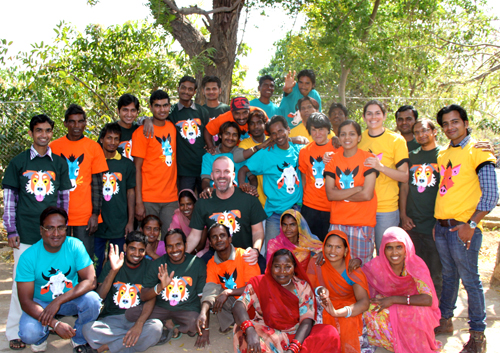
During the past month, our Compassion Education Team has given 10 presentations to 500 people, from primary school students to senior citizens, about how to help injured street animals, what are “animal rights,” reasons to go vegan, and what to do if you see cruelty.
Above – Rajkishor inspires 7th graders,
Neha motivates Udaipur animal lovers, and students pet dogs for the first time!
In addition to video and power-point presentations we brought 60 students from a local school on a field-trip to Animal Aid where they pet dogs, donkeys and even cows, and for many, it was for the first time in their lives. It’s harder to be compassionate when you are afraid, so by helping children overcome their fear of animals we are helping them to connect and understand the feelings of animals so that they will help them.
We held our 13th Sunday colony meeting where we’ve so far talked to over 300 Udaipur animal lovers who are regular callers on our emergency helpline. The objective of our colony meetings is to grow Udaipur’s animal protection movement from a grass-roots level, by encouraging animal lovers to take part in our first-aid training program, educating them on how to use the law to protect animals from abuse, and motivating them to use their voice to speak for those who cannot.
Major Sahib’s crisis turns into the happiest ending…
We found him lying in anguish on the side of the street, gravely wounded and broken.
The side of his head was being eaten by maggots and his body had given up all hope. We could tell that he had been lying in the same place for many hours if not days, and we believe that if we hadn’t rescued him right when we did, that this is where he would have died.
We named him Major Sahib for a good reason-this old boy was a soldier for LIFE.
He may have been tottering on the edge, but he definitely wasn’t ready to say goodbye.
Too injured to move, but still wagging his tail…
When we first got the call to rescue this young street dog, we thought he only had the injury we could see above his eye.
But as soon as we came in close, we were shocked. There were deep lacerations across his inner thigh and belly that were covered in blood. We were told he had been hit by a vehicle.
Unable to stand when we found him, this little braveheart still wagged his tail when our rescuer Nandu lifted him into our ambulance.
Just watch this video to see his overflowing joy after making a full recovery.
Posted on March 3, 2017 by Serbian Animals Voice (SAV)
Mark, thank you.
Last month, thanks to your donation, the Bee Defenders Alliance were at the European Court of Justice standing up for the bees.
Your donation meant this small group of independent scientists and beekeepers were able to take on the world biggest pesticides companies – Bayer, Syngenta and BASF. The team were all so grateful for your support.
The hearings have now finished and right now the judges are considering the case.
There were some outrageous claims made during the hearings, Syngenta’s corporate lawyers told the court they’re the ones trying to protect the bees – saying the idea they would market a product that harmed bees is “absurd”. They even said their neonic pesticides are so safe you can drink them!*
Thanks to your generosity the Bee Defenders Alliance lawyers were there to call out all of their lies for what they were. They made it clear that neonic pesticides are bad news for bees – and for all of us! This would not have been possible without you, so thank you.
As well as raising money to support the case we delivered over 57,000 messages of support from SumOfUs members to the Bee Defenders Alliance — they were hugely grateful to know there were so many people standing with them.
Here are just a few of the messages:
– “You’re not just beekeepers, you’re the keepers of our collective future.”
– “You have the support of thousands. We are right with you.”
– “Thank you for your amazing work and dedication to bees, nature, and our future.”
– “Thank you for caring enough for our planet and insects to fight on their behalf. Our future generations owe a debt of gratitude to you.“
We’ll get back to you (hopefully with good news!) when the verdict is delivered.
In the meantime thank you for standing up for the bees
Tricia, Wiebke, Liz and the team at SumOfUs
P.s. This was only possible thanks to your support. But there are still battles we need to fight to save the bees. Chip in so that we can keep standing up to the corporate giants putting profit before the environment.
* Please don’t drink pesticide! Drinking even a very small amount can cause significant harm to humans.
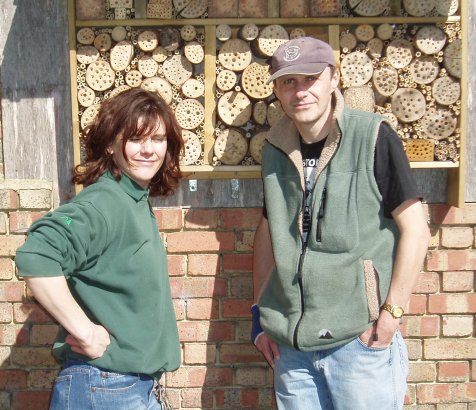
Working for Bees – Denise and Mark in front of their ‘Bee Hotel’ (made from drilled logs and individual bamboo canes) which has thousands of individual chambers for bees to lay eggs for new generations.






















 Serbian Animals Voice (SAV)