Australia: Live Export 19/6/20 From RSPCA Australia.

australiapg


From RSPCA Australia  19/6/20:


Dear Mark,

For those of us who care about the welfare of Australian farm animals, it has been a tough couple of weeks

The live animal export issue has reared its ugly head once again. Is there any industry that’s as disaster-plagued as this one?

Once again, the Government has decided in favour of supporting this volatile industry, over our own laws and against the will of the majority of Australians.

Once again, animals will suffer in the hands of this industry, and pay the price for their reckless approach to animal welfare.

Time and again, we are disappointed, and frustrated, and gobsmacked by what this industry is allowed to get away with. Unfortunately, the Government (and the very elected politicians who fought for those basic safeguards) backflip whenever the carrot of live exporter profits follows the stick of animal cruelty.

But there are some silver linings to this dark cloud.

Every incident that happens, and every action you take, is another chip away at this industry, adding to its horror public track record, of decades of repeated evidence of suffering and cruelty.

We had a measure of success in the northern summer ban, a measure we could not possibly have foreseen before the notorious Awassi Express journeys of 2017 blasted a long-overdue spotlight on the routine heat stress, suffering and death this industry was willing to inflict upon Australian sheep.

There were no plans or intentions to include an independent observer on this ship, but thanks to your efforts, there is one on board now. With your support, we wrote to politicians to urge attention to this issue, we kept phoning and emailing the department, and we saw multiple people speaking out in favour of our call (including the WA Premier himself).

While we sadly weren’t able to stop the ship from leaving, at least there’s someone on board now who can record the consequences of this absurd decision. We’ll be keenly awaiting their reports, images and video evidence.

And now we can also let you know that we’ve submitted a formal animal welfare complaint to the West Australian Government. The evidence of the suffering these sheep are likely to endure is overwhelming, and we believe it may be in breach of WA’s animal protection legislation.

This ship should never have been allowed to leave.

This has been an extraordinary chain of actions and decisions by the regulator, and we will continue to work over the coming weeks and months to find out how it has unfolded and to ensure it can never happen again.

Finally, regardless of the outcome for this shipment, we believe that – much like those five disastrous journeys of the Awassi Express in 2017 – this latest debacle may be a turning point for this disaster-plagued industry.

The failure of the federal government to uphold even its own regulations, despite its knowledge of the dangers;

The failure of live exporters to adhere to their own promised moratorium, introduced as a last-ditch measure to avoid a total ban;

And the strange chain of events that led to this surprise exemption decision, may prove to be the final blow to any remaining public trust or confidence in the industry or the regulators.

Industries cannot survive without community support, and the RSPCA believes this latest live export fiasco is likely to have significant long-term consequences for the industry, and may in fact expedite the inevitable end to live sheep exports.

As always, thank you for your efforts.

The RSPCA Australia team.

What is the problem


In 2014, 346 million kilograms of meat ended up in the trash.

13 million pigs don’t even reach the slaughterhouse

Up to 80% of the workforce are contract workers who live in collective accommodation and often earn less than the minimum wage.

The meat industry has no Corona – Problem.

The meat industry is THE problem.


My best regards to all, Venus


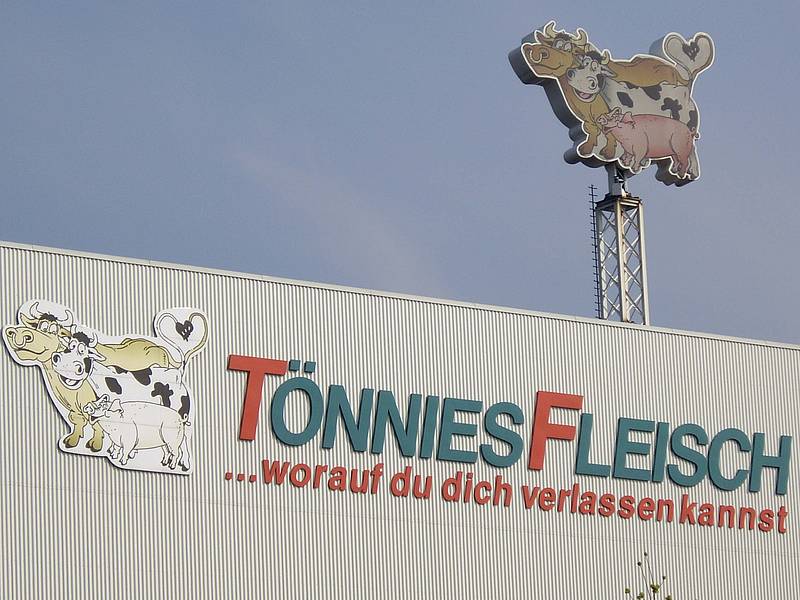
Germany: Alarm mood at the meat baron Tönnies

The number of employees at the Tönnies slaughterhouse who were infected with the coronavirus has continued to increase.
Now that 983 tests have been evaluated, 657 were positive and 326 were negative, according to a spokesman for the Gütersloh district.

In the district of Gütersloh, the situation at the slaughterhouse Tönnies in Rheda-Wiedenbrück, where the company’s headquarters are located, is dramatically deteriorating: Various media report 400 new infections with the coronavirus.

To this end, the operation of the Tönnies slaughterhouse should be shut down as far as possible.

In the meantime, everyone who worked on the factory premises would be in quarantine.

7,000 people are affected.
The district administrator also announced that all schools and daycare centers in the district will be closed.

There are no official reports as to whether the slaughterhouse has to close completely.  Tagesschau.de says that the district administration has threatened the company with closure if Tönnies does not get the corona infections under control.

“We have to assume that the working conditions and the accommodation of the people have contributed to the fact that the coronavirus was able to spread among the employees of the slaughterhouse in Tönnies,” said the Prime Minister of North Rhine-Westphalia.


For more…at https://worldanimalsvoice.com/2020/06/18/germany-alarm-mood-at-the-meat-baron-tonnies/


And I mean.. Tönnies is the largest meat producer in Germany, and the tenth worldwide.

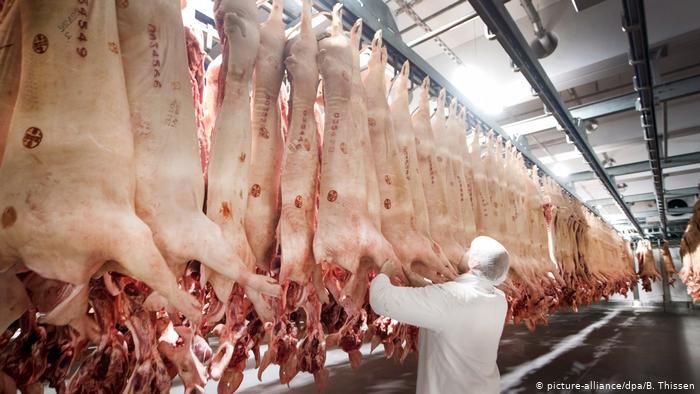
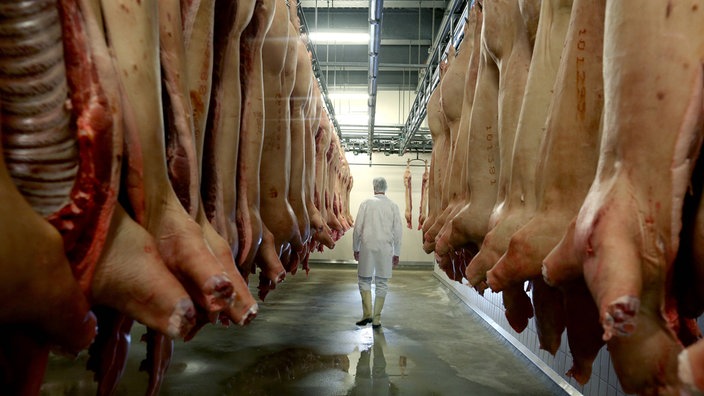
30,000 pigs are slaughtered on his farm every day.
He has earned very well with his business model for decades. And the exploitation of agency workers is part of it.

Therefore, it is unlikely that he will change the model “work contracts with workers from the Eastern Bloc”.
If Clemens Tönnies had a problem with that, he would have changed these conditions a long time ago.

There is actually no scandal in which Clemens Tönnies is not involved. But he has good friends in the federal government so that he can continue to exploit people and animals and collect fat millions!

Therefore it is for the meat baron probably unimaginable that his meat empire has to remain empty for a while.

You can call it what you want, but that’s how Germany works, that’s how the EU works – a pure business club to which only selected business oligarchs to have access …..

Up to 500 demonstrators demonstrated in Rheda-Wiedenbrück last Friday. They all protested loudly against the Tönnies company.

The activists accuse the group, which is one of the ten largest slaughterhouses in the world, of exploiting people and animals.

My proposition: Instead of closing daycare centers and schools, we have to close all slaughterhouses in Germany immediately as they are the real corona hotspots.

Citizens can safely survive a few months without meat and maybe they will get used to a new eating model without animal suffering.

My best regards to all, Venus


Animals, our partners


Animals can coexist, animals make loyal friendships, animals respect each other, animals have an enormous range of feelings.

When will we finally learn to see them as equal partners and share our lives with them in peace, happiness, and freedom?

Regards and good night from Venus


How long will we do this to the animals?!?


From Martin Balluch’s blog *, June 15, 2020

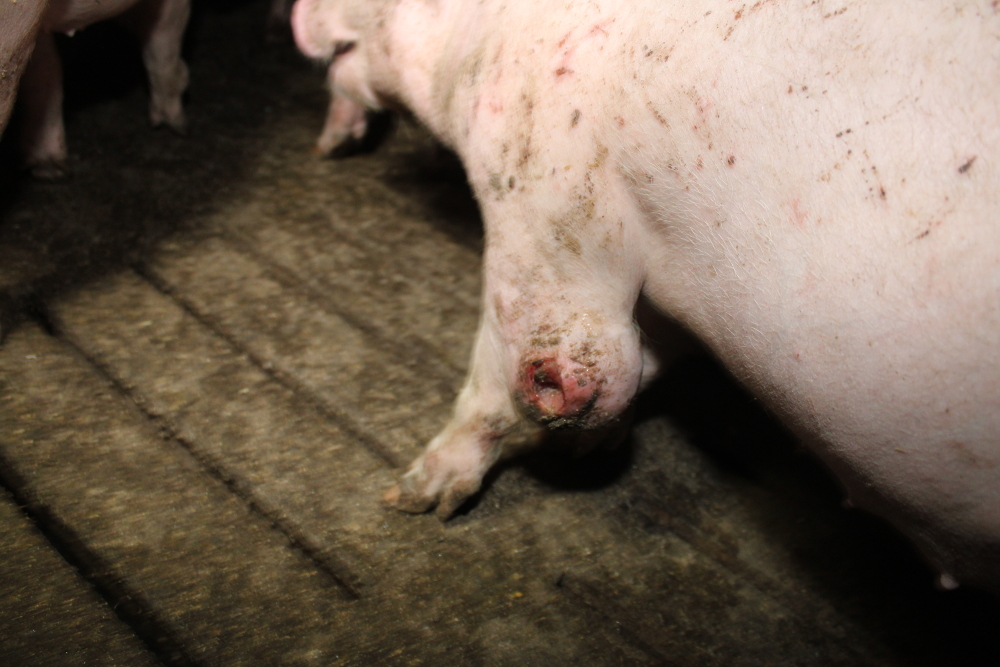
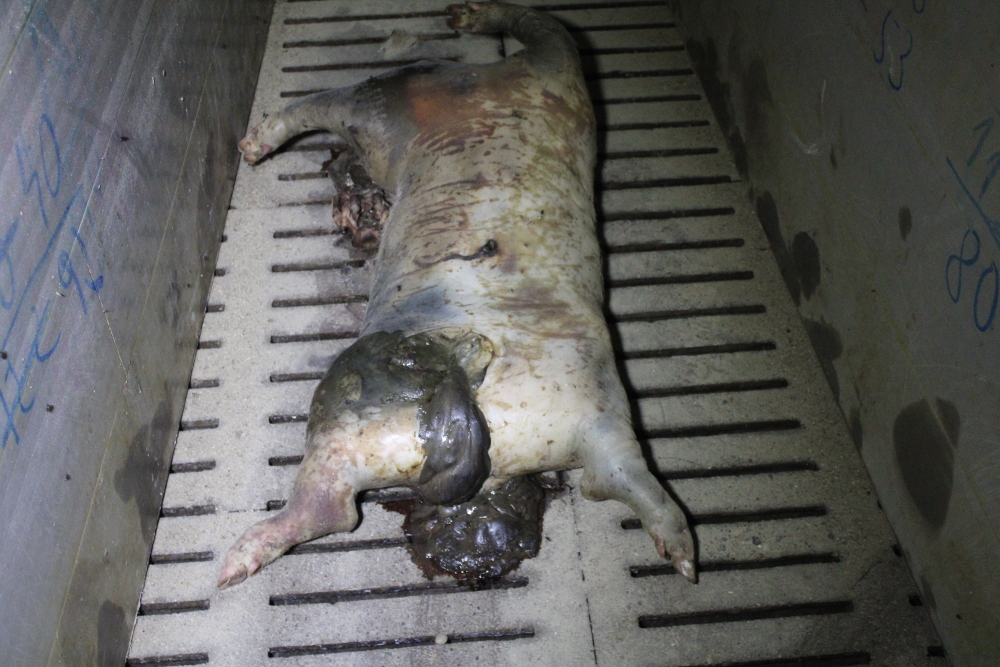
I feel sick in two ways when I have to look through these photos that have been leaked to the “Association against animal factories”.

First, because here again someone shamelessly dupes the public and pretends that everything is fine in pig farming in Austria.

Secondly, looking at these photos makes me nauseous when I see the suffering of the pigs so directly.

I will never get used to it. These poor creatures in these terrible filthy holes, hurt, desperate, forgotten.

The first glance into this pig factory is enough for the rest of your life:

Horrible tightness, horrible full-slatted floor, horrible injuries, horrible lack of employment.

What should these animals do all day long?

Except hurting each other with despair?

What, please, is that a life?

How can we do this to them?

How long has this dead pig been there?

Does nobody care?

Where do all these maggots come from? Nobody notices?

Is this all included in the calculation for input to the pig factory and output of meat, so that the most profit is generated?

Dear reader, with heart and brain, put yourself, very briefly, in one of these pigs and tell me what you feel.

Tell me how happy you are to live.

Tell me what else you expect from life. Tell me what you actually do for a long day and how you differentiate day and night.

Tell me how you can endure that and survive without completely despairing.

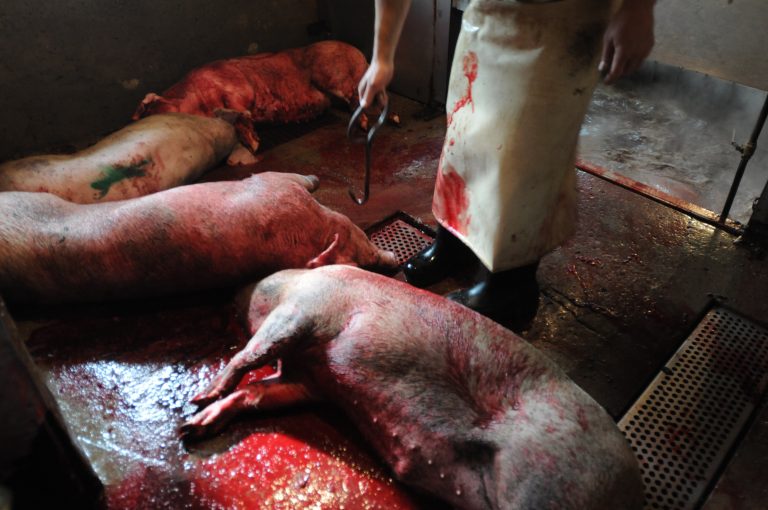
And in the end, brutal animal transport and death on the assembly line await you. Without compassion, without mercy.

* Dr. Dr. Martin Balluch is the founder of VGT (association against animal factories).
An excellent Austrian animal rights activist, with a lot of success for the animals in his country, especially against the gate hunting.

For more…at https://worldanimalsvoice.com/2020/06/17/how-long-will-we-do-this-to-the-animals/


And I mean…The myth of the farmer next door is a protective mechanism for the conscience of meat-eaters.
Today we know what the reality is in the animal farms, we also know about the suffering of the animals we eat.

We want to deny this reality so that we no longer have to think about how we can solve the problem “mass animal suffering”.

In general, with meat consumption, we have adopted a violent ideology that we want to justify as such with the myth of responsible meat consumption.

And that can be found today in organic meat, in regional meat, in animal welfare from farmers next door, in “humane” slaughter …

And so the meat-eaters continue to cooperate with one of the most criminal systems in human history, with the meat production system.

My best regards to all, Venus

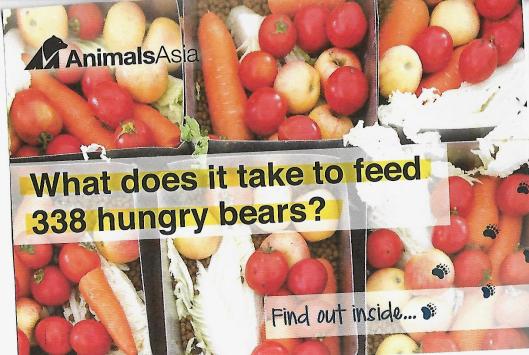
Animals Asia: What Does It Take to feed 338 Hungry Bears ?

https://www.animalsasia.org/

https://www.facebook.com/AnimalsAsia/

Please take a look at the following video and see how the lives of these bile bears has changed since they have been recued by Animals Asia. But despite being free from the suffering of the bile industry, they still need support; as AA has 338 hungry bears to support and feed every day.

If you can give anything, then please do.

Thank you

Regards Mark


AA 2 June 2020

AA 3 June 2020


Dear Mark,

As a member of Oliver’s Army you are the lifeblood of Animals Asia. Thank you so much for being a part of this amazing community of compassionate people, united in memory of Oliver.

Every rescued bear is different. But sometimes a bear comes along who, from the very second they are rescued, understands that they are safe. That nobody will ever hurt them again.

Long (pictured), rescued in 2015 after a decade used as a bile machine, was absolutely one of these amazing bears. He immediately put his horrific past behind him, and started living.

Here is a very special video just for you, showing how you have changed Long’s life and how he has grabbed it with both paws!

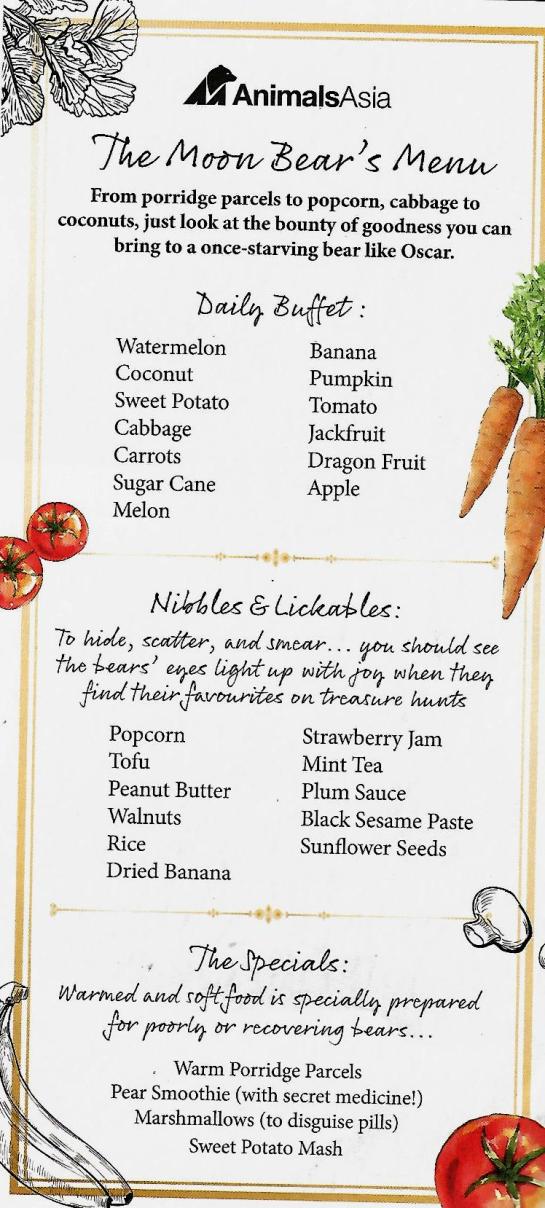
Without you, joyful moments like this wouldn’t be possible. You’re helping bears like Long to start again. To live happy, fulfilled and rich lives where they try new foods, make new friends and are cared for properly at every life-stage, for as long as they live. That’s why your support means so much.

Thank you again for being part of something so special,

Jill Robinson MBE, Dr med vet hc, Hon LLD
Founder and CEO
Follow me on twitter @MoonBearJill


Breaking! The Colombian Senate Votes To Ban Animal Testing For Cosmetics; Bill Now Moves To President’s Desk For Signature.

colom


Breaking! The Colombian Senate Votes To Ban Animal Testing For Cosmetics; Bill Now Moves To President’s Desk For Signature


https://worldanimalnews.com/breaking-the-colombian-senate-votes-to-ban-animal-testing-for-cosmetics-bill-now-moves-to-presidents-desk-for-signature/


Last week, the Colombian Senate voted to ban cosmetics testing on animals. The new bill, which will come into effect in 2024, prohibits the use of animals for the purpose of testing cosmetic products and their ingredients imported or manufactured in Colombia.

The Senate was almost unanimous in voting for the bill to pass. Congress sessions had been postponed due to COVID-19, but resumed virtually so that the bill and other legislative initiatives could be discussed.

With many multinational companies based in Colombia serving the Latin American market, the measure will also impact Pacific Alliance countries such as: Chile, Colombia, Mexico, and Peru.

Animal Defenders International (ADI) provided research and testimony in support of the bill that was introduced in 2018, and worked with House Representative and the author of the bill Juan Carlos Losada to advance the legislation. The bill is supported by the Colombian Government, National Association of Businessmen, and all 14 political parties.

“Supported by the public, we are delighted that this historic and anticipated initiative to protect animals has finally been approved,” Losada said in a statement.

The legislative text will now, and before June 20th, be reconciled in both Houses, in readiness for the President to sign into law.

“Today, Colombia becomes a better and more humane society, stated Senate co-author of the bill Richard Aguilar. “The prohibition of cosmetics testing on animals will avoid the suffering of thousands of sentient beings and lead to the development of new methods of research.”


Nearly 40 countries have ended the use of animals in cosmetics tests. The UK was the first country to introduce a ban in 1998, as well as India, Israel, New Zealand, and the 27 countries of the European Union.

In the United States, The Humane Cosmetics Act is before Congress and seeks to phase out animal testing for cosmetics, as well as the sale of animal-tested products.

Cosmetics tests on animals can include repeated, toxic doses of products to observe long-term poisonous effects on organs. The animals may be forced to inhale products, or have them pumped down their throats or applied to their skin. In skin sensitization tests to assess potential allergic reactions, researchers cause painful damage to the animals’ skin in order to test products.

Investigations undertaken by ADI have exposed terrible suffering of animals used in cosmetics testing, including racks of rabbits restrained while products are dripped into their eyes, also guinea pigs suffering raw and inflamed skin lesions.

Tests such as these are unnecessary!

Advanced scientific methods that do not involve harming animals are readily available and should be used. Such methods produce results that are more accurate and relevant to humans

You can help all animals and our planet by choosing compassion on your plate and in your glass. #GoVeg