Austria: Prince hunter arrested!

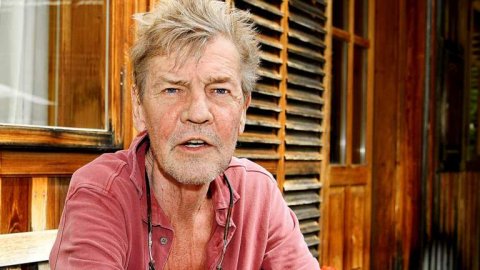
The Welf Prince Ernst August von Hannover, 66, was arrested in Austria on Monday evening (September 7th).

This was confirmed by the Wels regional court.

Reason: There should be reports against the nobleman for coercion, threats, and property damage.
A spokesman had told the “Bild” newspaper after the incident that all points should be charged together.
Prince Ernst August would then have threatened up to three years in prison.
The Wels public prosecutor had ordered the arrest of the prince, which was then carried out on Monday (September 7th).

The scandal prince was kept in custody for two days.

Now he’s out, but he has to adhere to the judge’s requirements.
One of his employees has reported against the Guelph Prince.

Ernst August von Hannover is said to have threatened her and her husband with hounding a group of thugs and smashed a window with a traffic sign. The police moved out on Monday because of “suspicion of coercion”. …

Since the 66-year-old had already attacked a police officer in July, the officers carried body cameras to record the arrest.

The German nobleman caused a stir several times in the past few months. After the attack on the police, Ernst August von Hannover was briefly admitted to a psychiatric ward. Just a week later, it hit the headlines again.

Armed with a baseball bat, he allegedly drove to the police station and threatened officers there to kill them (!!!)

wildbeimwild.com

And I mean…“Hunting is a subsidiary form of human mental illness,” said Theodor Heuss!

And obviously, someone who massacres animals in the forest develops himself into one who loses empathy and compassion for his fellow human beings.

My best regards to all, Venus

Live Exports – KLTT sells twin-tiered live export ship.

AL_SHUWAIKH another 4

https://www.farmonline.com.au/story/6930681/kltt-sells-twin-tiered-live-export-ship/?cs=4698

KLTT sells twin-tiered live export ship

Aidan Smith19 Sep 2020

KUWAIT Livestock Transport and Trading (KLTT) – Australia’s largest buyer of live sheep – has sold its twin-tier livestock vessel the Al Shuwaikh for an undisclosed amount.

KLTT’s Western Australian subsidiary, Rural Export and Trading WA managing director Mike Gordon said a Jordanian company, Al Delta Company, purchased the vessel about two weeks ago.

The Al Shuwaikh was due to be phased out from the Australian trade because of new marine orders that prohibited twin-tier vessels from operating in Australia beyond January 1, 2020, without an exemption.

Until now the vessel did have an exemption but it was only used for sheep.

A clause in the paperwork was discovered only when it was pointed out to the company by agriculture department officials, that denied them the ability to load cattle on deck five, costing KLTT $1million per voyage from WA.

Mr Gordon said the 34-year-old Al Shuwaikh was “due to be retired”.

He said the company would continue to service Australia “for the foreseeable future” with its two remaining vessels, the Al Messilah and the newly-purchased Al Kuwait, the world’s largest livestock carrier.

Mr Gordon said the vessels would be spaced to run back-to-back trips from September 16 to May 30, 2021, until the northern hemisphere summer moratorium prohibited trade to the Middle East (June 1 to September 15).

The company would also divert the vessels to South Africa when needed.

Two other twin-tier vessels had been servicing the Australian market – the Maysora and the Bader III.

Livestock Shipping Services, which owns these vessels, had cut the upper deck from the Bader III but decided to utilise the vessel in other markets.

Farm Weekly understands that the company has applied for an exemption for the Maysora to continue to service Australia in the short-term, however it’s last known position was off the coast of north-west Africa.

Just a few of our (WAV) past posts related to the AS:

Regards Mark

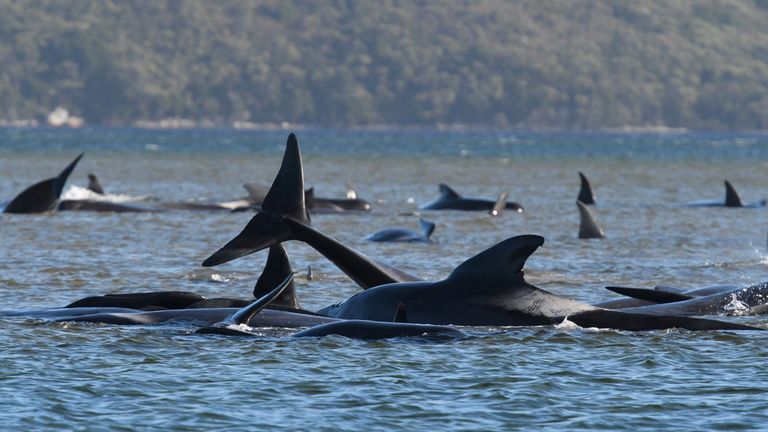
Tragic – 380 whales have died after becoming stranded off Australian coast. Mass Rescue Attempt To Help Survivors.

TOPSHOT - This photograph taken on September 21, 2020 shows a pod of whales stranded on a sandbar in Macquarie Harbour on the rugged west coast of Tasmania. - Up to 90 whales have died and a "challenging" operation is underway to rescue 180 more still stranded in a remote bay in southern Australia on September 22. Scientists said two large pods of long-finned pilot whales became stuck on sandbars in Macquarie Harbour, on Tasmania's sparsely populated west coast. (Photo by - / POOL / AFP) (Photo by -/POOL/AFP via Getty Images)

380 whales have died after becoming stranded off Australian coast

Officials believe that the new group of the whales found stranded are mostly dead, and cannot be rescued.

Around 380 whales have died after becoming stranded in an inlet off the coast of the Australian island of Tasmania, according to officials.

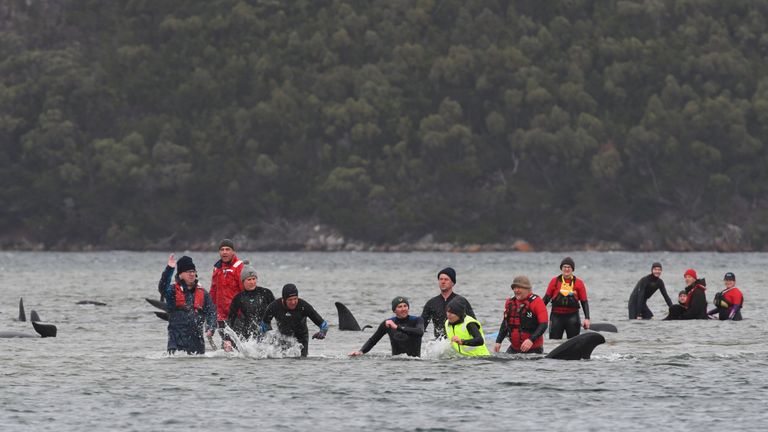
In the remote town of Strahan, rescuers had been scrambling to save the survivors among what was thought to be 270 pilot whales on Monday, from a beach and two sandbanks.

STRAHAN, AUSTRALIA - SEPTEMBER 22: Marine rescue teams attempt to help save hundreds of pilot whales stranded on a sand bar on September 22, 2020 in Strahan, Australia. More than 200 pilot whales are stranded on a sandbank at Macquarie Harbour on the west coast of Tasmania, with rescuers desperately trying to save the whales as more than 90 are feared dead. (Photo by Brodie Weeding/The Advocate - Pool/Getty Images)

Read it all at:

https://news.sky.com/story/almost-500-whales-now-stranded-on-australian-island-of-tasmania-12079113

Tackling respiratory diseases with advanced non-animal models.

respiratory – Google Search

Respiratory System: Facts, Function and Diseases | Live Science

Tackling respiratory diseases with advanced non-animal models

21 September 2020

A new JRC study describes almost 300 non-animal models used for research on respiratory diseases and the development of new drugs and therapies.

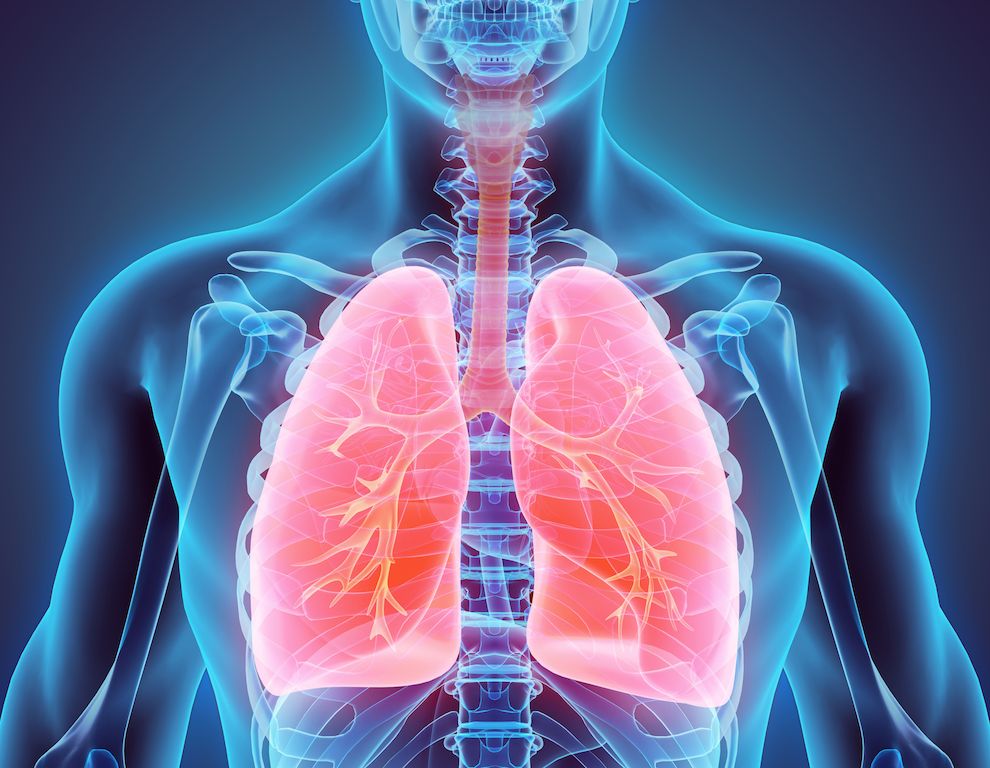
Respiratory diseases such as asthma, chronic obstructive pulmonary disease (COPD), cystic fibrosis, pulmonary fibrosis and lung cancer are the most common of all diseases and causes of death worldwide.

However, over 90% of new candidate drugs fail to make it through clinical trials and gain market approval. Although there are several reasons for this, limitations of animal models to capture critical aspects of human physiology and disease are being increasingly cited as a critical issue.

Attention is shifting therefore to non-animal models and methods based on human relevant tools and thinking to advance our understanding of respiratory diseases and offer new hope to patients.  

The study, coordinated by the JRC’s EU Reference Laboratory for alternatives to animal testing (EURL ECVAM), has produced a unique knowledge base that contains detailed descriptions of nearly 300 non-animal models being used for respiratory disease research.

The knowledge base is in an easy-to-use spreadsheet format and is freely available to download from the EURL ECVAM Collection in the JRC Data Catalogue.

In building the knowledge base, over 21,000 abstracts from the scientific literature were screened and from these, a total of 284 publications were selected that described the most representative and innovative models.

“To our knowledge this is the first time that such advanced non-animal models used in biomedical sciences have been systematically collected and analysed”, comments JRC scientist Laura Gribaldo. “It’s been a real challenge to put all the information together in a structured and easily accessible format since there is a huge amount of heterogeneous data out there spread over a plethora of different scientific journals and electronic resources.”

To our knowledge this is the first time that such advanced non-animal models used in biomedical sciences have been systematically collected and analysed.

Laura Gribaldo, JRC scientist

Regards Mark

New Zealand: Live Export – It Is Not Worth the Suffering.

From our live export campaigner friends at SAFE in New Zealand:

Kia ora Mark

Tens of thousands of animals have died in live export disasters over the last decade.

Animals are exported alive from New Zealand for breeding due to a loophole in our law. These animals are transported in dangerous conditions on open sea voyages or by air. When they reach their destination, they are likely kept and slaughtered in ways that are illegal in New Zealand.
 

Live export is not worth the suffering. 
 
SAFE has launched an ambitious international campaign to put pressure on Labour leader Jacinda Ardern to impose a complete ban on all live export.

This advertisement is running in the Guardian online and will be seen by hundreds of thousands of readers across the UK and Europe.

Jacinda Ardern is known around the world for being a good leader and in Aotearoa New Zealand for putting kindness at the forefront of her values. Sadly, that kindness does not extend to animals.
 
The appalling human and animal suffering that happened when the Gulf Livestock 1 sank cannot happen again.
 
Jacinda Ardern needs to know just how many people care about animal welfare, and that the world’s attention is on how New Zealand handles this disaster. Our international reputation depends on it.

SAFE has run an advertisement in the Guardian newspaper so that people around the world can ask Jacinda Ardern to extend her kindness to animals and ban live export once and for all. You can help by sharing this advertisement with your friends and family via email and social media.

Share the advertisement now:

This year, approximately 65,000 cows have left our shores. There are significant risks to the welfare of farmed animals transported by ship, especially over long distances. The Pacific Ocean is renowned for rough seas that can cause the cows to suffer seasickness and be thrown around and injured. The rough seas, unnatural diet, high stocking densities and heat stress all have a negative effect on these animals, with some suffering injuries and others dying on board.

Once the journey is over, they may well end up confined in concrete factory farms for the rest of their lives, never to set foot on grass again. Then, when no longer deemed profitable, these cows will be killed, most likely by methods so cruel they are illegal in New Zealand.
 
We need to keep up the opposition to this cruel trade, and we can’t do it without you. Please make a gift today towards SAFE’s international campaign so we can continue to shine a spotlight on New Zealand’s cruel live export trade.

Animals need us to all work together to end their suffering.
 
Let’s ban live export – once and for all.  

Debra Ashton
Chief Executive Officer

Donate and give a gift to the campaign:

Show Jacinda that live export harms New Zealand’s reputation:

Regards Mark

souvenir photo…


…for the Family Album

Have a good night, Venus

Spain: the murder of Forajido in Esquivias

Bullfight in Esquivias endangers public health!

This summer we have not stopped working for animals.
In addition to holding street protests in the main cities of Spain, we have infiltrated the bullfights that continue to be organized, despite the health crisis.

We were witnesses of savagery in Salamanca and denounced.

And now we bring to light these images of the bullfight on August 21 in Esquivias (Toledo).
We have placed the corresponding complaints in the hands of the authorities.


It broke our hearts to witness the Forajido killed in the square.

There is no greater pain than seeing a helpless and bewildered being suffer, unsuccessfully seeking the help of those who applaud every time he bleeds.

We believe that it is important to make these images known, no matter how harsh, so that his death is not in vain.
We live days of uncertainty in a country in crisis and some prefer to continue torturing animals to death instead of working for better normalcy.

Did you know that extraordinary items are still being allocated to rescue bullfighting?

They touch 7.3 million euros and Madrid leads the ranking of the communities that will give the most money to the sector, with up to 4.5 million euros.

It is outrageous!
We are working so that bullfighting is condemned by society and its rejection increases.

Only by joining forces can we ensure that it continues to decline and achieve its abolition once and for all.

Only with you, we are stronger! We need your help now more than ever to confront the powerful bullfighting lobby in Spain.

And I mean… “If bullfighting is an “art form,” then so are ritualistic cult killings.
If bullfighting is “authentic religious drama,” so too is war and genocide.
If the matador is ennobled, let us praise every mass murderer” (Steven Best)

The European Union does not pay extra agricultural subsidies for bullfighting. But part of their annual 30 billion euros in direct aid for agricultural land in the EU Member States also goes to farms that breed fighting bulls.
This is known as “agricultural subsidies”!

Official figures are not available. The Greens estimate that annual subsidies of 130 million euros go to bullfighting.

This is subsidized animal cruelty – nothing less.

Perhaps someone will soon come up with the idea of ​​reviving the witch burnings, which were well attended in the Middle Ages and very popular by bored audiences.
This was also a sad culture in Spain!

Except for a few mentally weak proletarian Germans and a few brain-sick Europeans, this form of “culture” really doesn’t even resonate with the dumbest of the very dumb.

We can be sure that every day there are more and more animal lovers and animal rights activists (= antitaurinos) who see this massacre as a disgrace for their country and want to abolish it.

Time is ticking for the animals and we know, it will end.

My best regards to all, Venus