USA: News from the Center for Biological Diversity.


Wildlife Refuges No Safe Haven From Dangerous Toxics

America’s national wildlife refuges are being doused with hundreds of thousands of pounds of dangerous agricultural pesticides every year, according to a first-of-its-kind analysis by the Center for Biological Diversity.
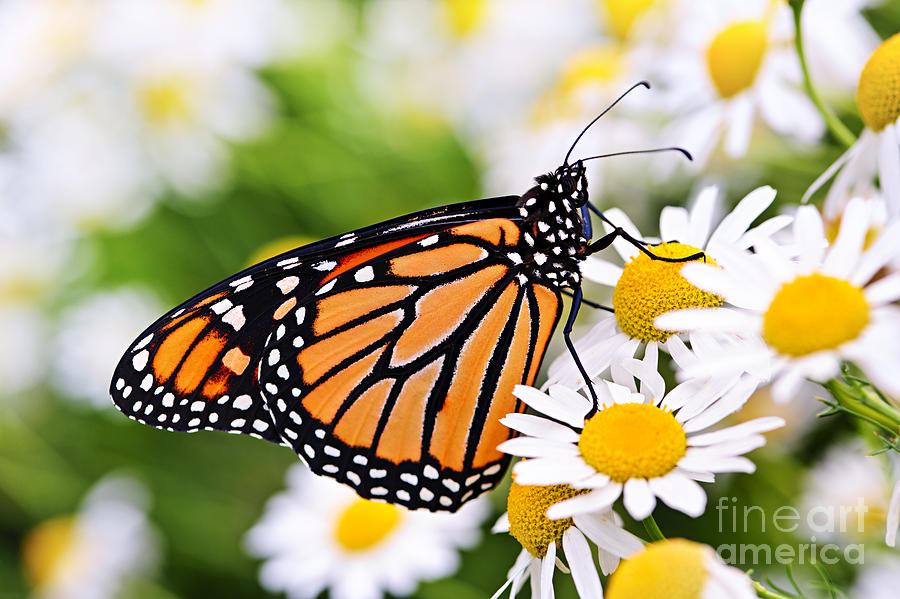
Our report, No Refuge, reveals that more than 490,000 pounds of pesticides were dumped on commodity crops like corn, soybeans and sorghum grown in national wildlife refuges in 2016. The analysis was conducted with records obtained by the Center under the Freedom of Information Act.

“These refuges are supposed to be a safe haven for wildlife, but they’re becoming a dumping ground for poisonous pesticides,” said the Center’s Hannah Connor. “Americans assume these public lands are protected, and I think most people would be appalled that so many pesticides are being used to serve private, intensive agricultural operations.”

Press Release link – http://www.biologicaldiversity.org/news/press_releases/2018/wildlife-refuge-pesticides-05-10-2018.php?utm_source=eeo&utm_medium=email

Read the ‘No Refuge’ report via this link – https://docs.google.com/gview?url=http%3a%2f%2fwww.biologicaldiversity.org%2fcampaigns%2fpesticides_reduction%2fpdfs%2fNo-Refuge.pdf

 

Center for Biological Diversity – web site:

  http://biologicaldiversity.org/


More News:


Victory: Taiwanese Humpback Dolphin Gets U.S. Protection

There are fewer than 75 wild Taiwanese humpback dolphins left in the world. But good news this week: In response to a petition from the Center and allies, the National Marine Fisheries Service protected these incredibly rare dolphins under the Endangered Species Act.

The long-snouted, mottled-gray mammals are threatened by gillnet fishing, pollution, boat traffic and development along Taiwan’s west coast, including proposed construction of large wind farms. The endangered listing will let the United States provide expertise and resources to support Taiwan in conserving these animals.

“This could save these dolphins from extinction,” said Abel Valdivia, an ocean scientist at the Center. “International cooperation is the key to saving certain critically endangered species.”

Read more in our press release.


Suit Launched to Save Beautiful Borderlands Moth

The Center, Defenders of Wildlife and Patagonia Area Resource Alliance have filed a notice of intent to sue the U.S. Fish and Wildlife Service in order to secure Endangered Species Act protection for the rare, gorgeous Patagonia eyed silkmoth.

This moth — whose bright orange-yellow wings sport large, striking “eyespots” — clings to survival in only one U.S. location, an abandoned cemetery in Arizona, and two places in Mexico. We filed our notice after the Service rejected a petition to protect the moth.

Read more.

Petitioned Filed to Save Texas and New Mexico Lizard

Thousands of acres of habitat for the rare dunes sagebrush lizard are now at risk from oil and gas drilling and sand-mining projects in Texas and New Mexico — so the Center filed a petition Tuesday to protect the lizards under the Endangered Species Act, along with the habitat critical to their survival.

The U.S. Fish and Wildlife Service decided not to protect the species in 2012, in part because Texas promised to implement its own voluntary conservation plan — finalized by then-state official Susan Combs, who’s now a senior Trump appointee for fish, wildlife and parks at the Interior Department. The plan, which Combs oversaw through 2015, has failed to conserve the lizard.

Read more in The Texas Tribune.


Climate Change Heats Up: CO2 Hits New High

 

Planet Earth just reached a disturbing milestone: Levels of carbon dioxide in the atmosphere are now higher than ever recorded.

For 60 years the Mauna Loa Observatory in Hawaii has continuously measured carbon dioxide. Data from April 2018 show that for the first time ever, atmospheric CO2 exceeded 410 parts per million. Meanwhile, to meet goals established by the 2015 Paris Accord, we need to be reducing levels of carbon dioxide to avoid the worst effects of climate change.

Read more at CNN.


Why does the poultry breeder Wiesenhof invest in fake meat?

For about three years, various startups have been working on producing artificial meat from muscle cells. Celebrity investors such as Bill Gates, Richard Branson and Elon Musk’s brother Kimbal believe in the lab product, investing millions in young biotech companies. One of them is the Israeli startup Supermeat, which also involved the PHW Group in January. Behind the poultry farmer from Lower Saxony are brands like Wiesenhof and Bruzzzler.  Wiesenhof is one of the largest German poultry farmers.


Marcus Keitzer manages the investments and takeovers of the PHW Group. In an interview he talks about the poultry breeder’s the startup plans.

Mr. Keitzer, when will Beyond Meat’s burgers be available in Germany?
We plan to start in the summer to serve our customers – initially in the catering system. However, one must not forget that Beyond Meat is still a startup and is therefore very busy in production in the USA. So, we have to be a bit flexible as well.

Will the vegan burgers also be on the market?
Absolute. We will not confine ourselves to specific channels. But when exactly that will happen, I cannot say.      In January, Supermeat completed its round of financing, including with capital from the PHW Group.


When was it decided to invest in the startup from Israel?
We monitored the topic of in vitro meat over a period of two to three years and analyzed how Wiesenhof can get even closer to the subject last year. In 2017, we decided that the group can only be close to the industry when it joins one of the startups in the in-vitro sector.


What is your involvement with Supermeat concretely?
First, we are there in the observer role. In the current first step, we support where we can, but of course, in-vitro technology is not our core competence. Our contribution is very clear when the product is ready for the market. For example, we then consider which product categories could be offered, how the sale will be organized in the European market and will certainly be able to provide support in logistics and distribution.

Are there any plans when the laboratory meat will go on sale?
I wish I could give an answer. But realistically, we’re talking about three to five years here. And even that is not a conclusively reliable statement. Producing a single in-vitro burger or an in-vitro chicken breast is one thing; to go into industrial production, another. The industry still faces great challenges at this point.


Prior to the funding round of Supermeat, the PHW Group never appeared as an investor. In which startups is the PHW group still involved?
For us, the topic of startup and investment is not new. Supermeat is not the first participation, but certainly the most prominent. We are relatively active in the field and seek exchanges with young entrepreneurs. For us, it makes sense to help startups with smaller investments – but do not always make it public.


Tyson Foods is one of the world’s largest meat producers and also involved in Beyond Meat. To what extent is the US company competition to Wiesenhof?

I think their strategy and ours are going a bit in the same direction. Tyson Foods is picking up the same trends as us and they also have their own venture capital fund – even though Tyson is a different order of magnitude. However, the stake in Beyond Meat is not a competitive issue for us because Europe is not a core market for Tyson Foods and we do not serve the American market.


The big butcher Tönnies has retired his veggie line because the sales numbers have dropped. And according to GfK, the market for meat substitutes is also declining. How does Wiesenhof adjust to this?

Chicken remains our core business. But we are broadening our product range and want to define ourselves as a provider of high-quality proteins. And that includes vegan proteins. Of course, we also see the market development, but you have to look more differentiated.

In what way?
In the past, manufacturers could sell these foods because it was vegan. Today, the products are mainstream, the Flexitarier has taken up the topic. Our target audience is no longer just the vegan consumer, but the flexitarian; who still wants to eat his chicken breast, but also wants to have a highquality vegan product. This development is relevant for us.

Such substitute products of plant origin currently make up much of Wiesenhof’s total sales. How should this develop in the future?

The vegan products are a small but important part of our portfolio, in which Wiesenhof invests corresponding sums. We want to broaden our scope in this area and we are confident that we will be able to achieve corresponding results. Of course, meat substitutes are still a niche market and that will tend to stay that way. But even so, a niche market is attractive.


The Osnabrück Startup Bugfoundation has just launched the first burger made of insects in Germany. Is this also a possible meat substitute product, which interests Wiesenhof?

I can not answer that in general. Insect foods have definitely taken a very interesting development and we perceive that as a theme. But the question remains whether the products are currently accepted by the customer and to what extent this can be sustainably successful.

https://ngin-food.com/artikel/wiesenhof-in-vitro-fleisch-vegan-beyond-meat-supermeat-startups/

England: A Forest – Acoustic and Studio. Enjoy !


Canada: Seal Murder Has Ended; Figures Down On Last Year.

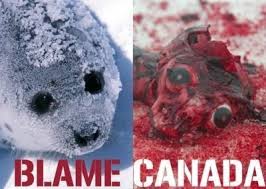
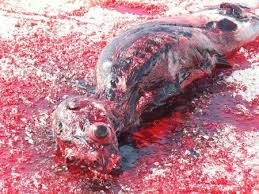
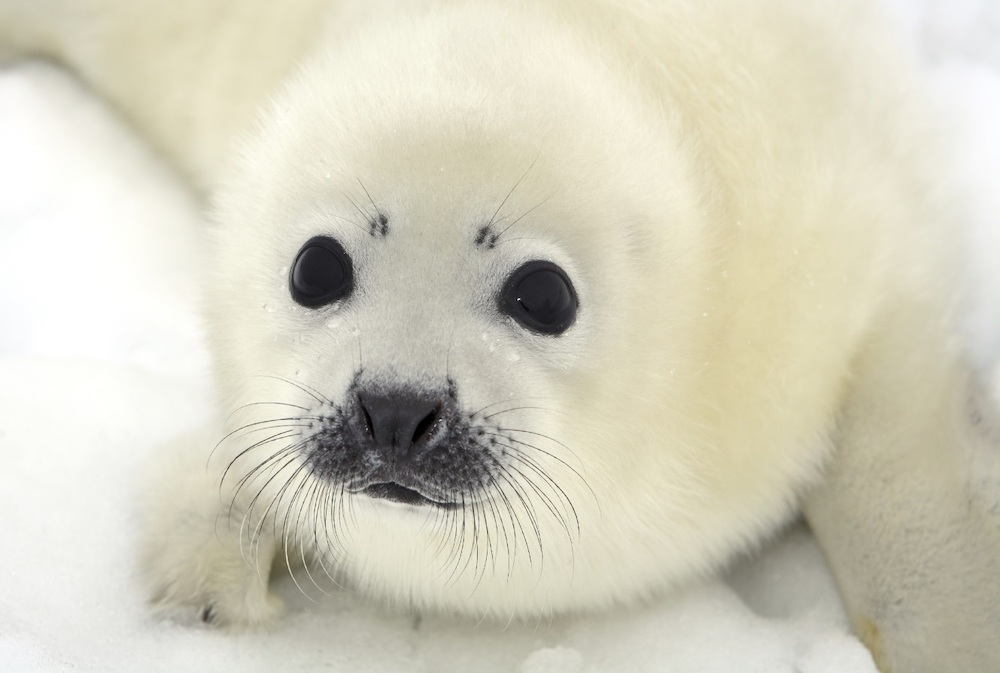
The harp seal slaughter in Canada has ended, with 59,076 seal pups “landed.”

This official number does not include the seals who were “struck and lost” – in other words, seals who were shot but only injured and slipped away, only to die later. The total number of seals killed by sealers this year could be about 65,000, if about 10% were “struck and lost.”

Looking on the bright side, the death toll is much less than last year, when almost 81,000 seal pups were “landed” and also higher than the year before, when the official number was 66,800.

Update on Our Truth About Sealing Campaign

Although surveys of Canadians have found that the majority oppose the seal “hunt” – when the questions are asked the “right” way, in reality, many Canadians hesitate to speak out against the commercial seal slaughter because they are under the false impression that sealing is necessary – for the financial welfare of the fishermen/sealers, to control the seal population, or for the survival or welfare of the Inuit.

Our ongoing Truth About Sealing campaign, which includes ads on Canadian TV and Facebook, has already reached hundreds of thousands of Canadians. On TV, we have aired our “Nothing to Be Proud of” commercial on both broadcast and cable (“specialty”) channels, with over half a million impressions.

On Facebook, our ad that addresses the propaganda conflating Inuit sealing (in which mostly adult ringed seals are killed for food and clothing used in the communities) and the east coast commercial seal “hunt” has been shown over 445,000 times, reaching over 345,000 Canadian Facebook users. Our “Nothing to Be Proud of” commercial has been shown on Facebook over 70,000 times, to over 50,000 Canadians.

All this advertising has generated awareness and debate. We have received hundreds of comments on Facebook, including comments by people who were misinformed and believed false propaganda of the government and sealing industry. This enabled us to educate these people, along with many others, and correct their misconceptions. This is what it will take to finally end the seal “hunt” in Canada.


Sealers are Desperate

As the demand for seal pelts declines, Canada’s sealers are getting desperate. Some are calling for a cull, against the advice of DFO’s own scientists. At this point, Canada’s DFO has not indicated any movement in this direction. We will monitor this situation vigilantly.

In addition to calling for a cull, the Canadian Sealers’ Association has asked the government to allow new sealing licenses to be issued. They are concerned that sealing may die out as sealers get old and retire. We are urging the government not to allow new licenses to be issued; and you can help by sending an email to Canadian officials.

Thank you for caring and taking action.

For the seals,

Diana Marmorstein, Ph.D.
CEO


Harpseals.org

Visit our sister site, Furseals.org

Be a walking billboard for the seals with t-shirts and other seal activist gear.

Join us on Facebook.

Follow us on Twitter

Donate to help us save the seals

USA: In 2018; Bears, Elephants and the Circus Just Dont Mix. Take Action to Stop It.

The Yaarab Shriners are planning to bring a cruel and dangerous elephant and bear show to Jim Miller Park in Marietta, Georgia.

The elephant exhibitor for the circus has a history of failing to meet animal-welfare regulations and of endangering the public, and an expert who observed the bears at another Shrine circus reported that they suffered from ongoing physical and psychological trauma.

Please use the link below to tell the Shriners and the venue to cancel the animal acts.

        http://peta.vg/27u8


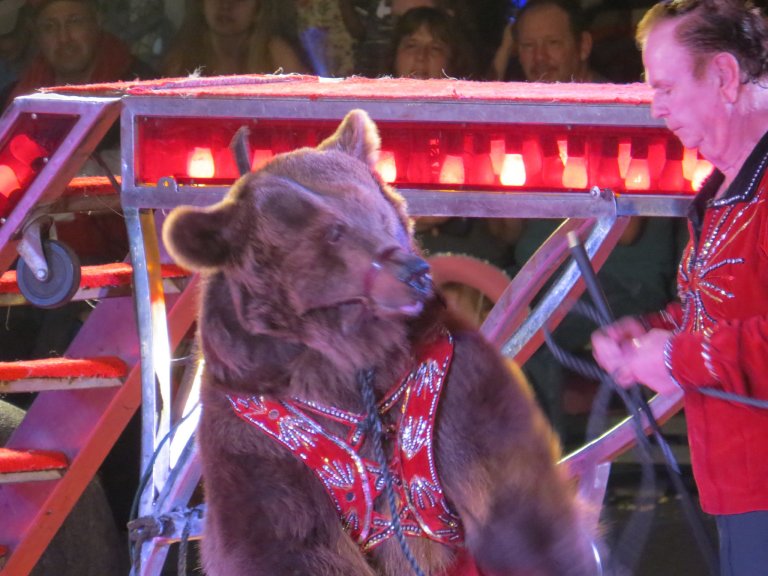
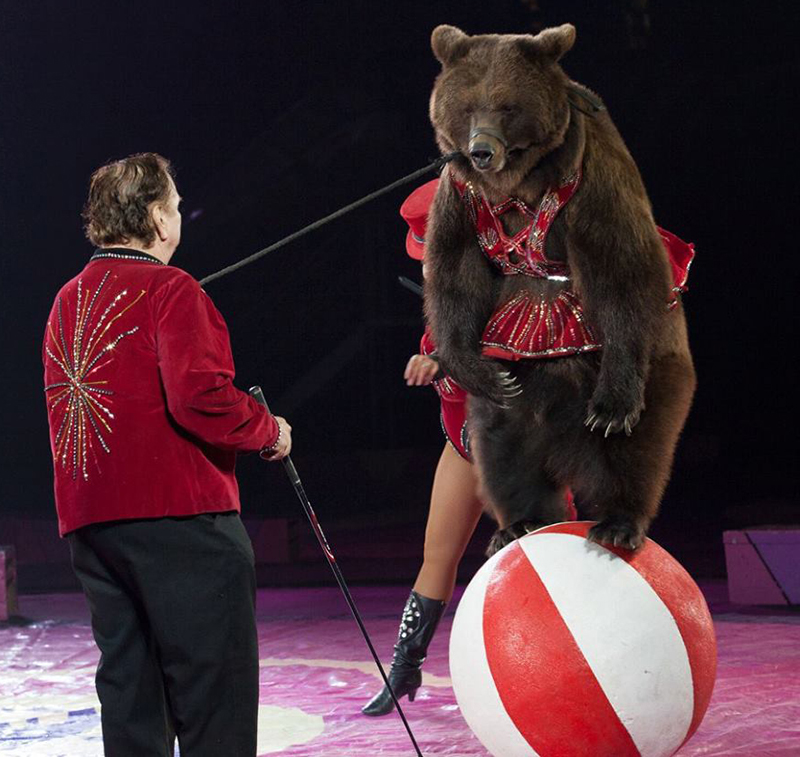
Shrine circuses should be fun for everyone, right? Well, they’re not fun for the suffering elephant coerced into performing confusing and difficult tricks or the muzzled bear forced to ride a bicycle … yet that’s on the schedule for the Yaarab Shrine Circus performances at Jim Miller Park in Marietta, Georgia.

The elephant exhibitor for the circus, Tarzan Zerbini Circus, has a history of animal-welfare citations and endangering the public. Animals used by the circus have seriously injured children, and an elephant even killed a trainer following a performance.

Then there’s Castle’s Bears—a company that forces bears to perform demeaning and possibly painful tricks. A video surfaced last year showing one of the bears urinating in apparent distress when being pulled by a leash and forced to walk on his or her front legs.

Tell the Yaarab Shriners and Jim Miller Park to drop the animal acts!

Bears and Elephants Don’t Want to Perform for the Yaarab Shrine Circus

This month, the Yaarab Shrine Circus will perform at Jim Miller Park in Marietta, Georgia. The problem? It’s planning to force muzzled bears and suffering elephants to perform confusing and difficult tricks.

The bears are provided by Castle’s Bears, a company that dresses them in ridiculous costumes, muzzles them, yanks them around on leashes, and forces them to do demeaning and possibly painful stunts. In a recent report, an expert who observed Castle’s Bears noted that the animals were managed through “fear, coercion, and punishment,” weren’t provided with proper care, and suffered from ongoing physical and psychological trauma.

As if that weren’t reason enough to drop the animal acts, Tarzan Zerbini Circus—the elephant exhibitor for this circus—has been cited for violating federal animal-welfare regulations, including by failing to provide animals with the minimum required space. Animals used by the circus have seriously injured children, and an elephant trainer was trampled to death by one of the elephants following performances at a Shrine circus.

Please tell the Yaarab Shriners and Jim Miller Park to ensure that the performances go forward without animals.

https://support.peta.org/page/5292/action/1?utm_source=PETA::E-Mail&utm_medium=Alert&utm_campaign=0518::ent::PETA::E-Mail::Yaarab%20Shrine%20Circus%20Suffering%20Elephants%20Muzzled%20Bears::::aa%20em&ea.url.id=77001&forwarded=true


The suffering of India’s “sacred” cows for milk and leather!


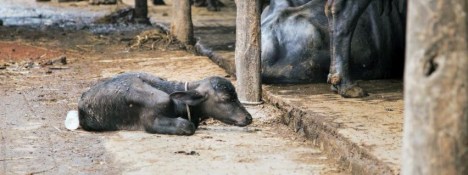
Honored and tormented: An undercover research by Animal Equality in more than 100 Indian dairy companies brings unimaginable animal suffering to light.

Animal Equality has spent more than two years researching 100 dairy farms, 11 live animal markets and eight slaughterhouses in India. The result is the report Honored and tormented – The suffering of India’s “sacred” cows for milk, the most extensive research in the Indian dairy industry so far. This is directly related to the Indian leather industry – and Germany is one of the major buyers of this leather from India.


The recordings of our investigators reveal shocking:

-Cows are inseminated by inexperienced workers with contaminated equipment and unhygienic conditions.

-Due to the emotional stress of cow and calf separation, some animals stop producing milk; These cows are placed by the workers next to dead, straw-stuffed calves. So they should believe that it is their own calf.

-The animals are beaten by workers with sticks and chains, they are kicked and sometimes even sexually abused.

-In none of the farms examined are the cows cared for by veterinarians; they either remain untreated or farmers use their own medication to cut costs.

-On the way to the slaughterhouse, up to 30 animals are loaded on a transporter, which is actually only allowed for a maximum of six animals.

-Traders twist or break the tails of the animals, rubbing chilies into their eyes and ramming sticks into their genitals to force them into slaughter transports.

-In the slaughterhouse the cows and cattle are repeatedly cut through the throat; Hardly a worker kills the animals already with the first cut.

-Many animals are fully conscious during the slaughter process and also experience the subsequent mounting.

Already in 2016, Animal Equality presented the findings of this research to the Indian government and made recommendations on how to ensure a higher standard of animal welfare in the dairy, meat and leather industries. As a result, India’s government initially enacted a number of bans, particularly for live animal markets, to protect cows and buffaloes from extreme but commonplace suffering. However, following resistance from some Indian regions, animal markets have returned to some practices, such as the sale of disused dairy cows for slaughter. In dairy farms and slaughterhouses, torture states still prevail.

We have launched a petition to convince the Indian government to finally take the necessary steps to protect the cows, calves and buffaloes from this agony. Support our claims today with your signature.

https://www.change.org/p/gequ%C3%A4lt-f%C3%BCr-milch-und-leder-hilf-indiens-heiligen-k%C3%BChen

https://www.animalequality.de/neuigkeiten/verehrt-und-gequaelt-kuehe-in-indien


There is probably no difference between simple Amazon packages and animals!


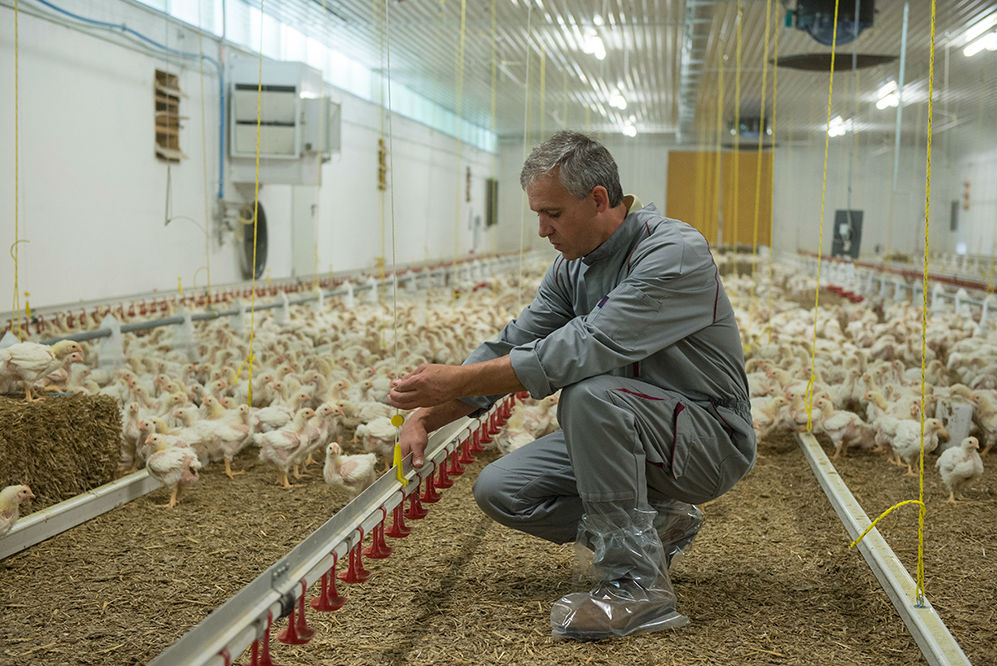
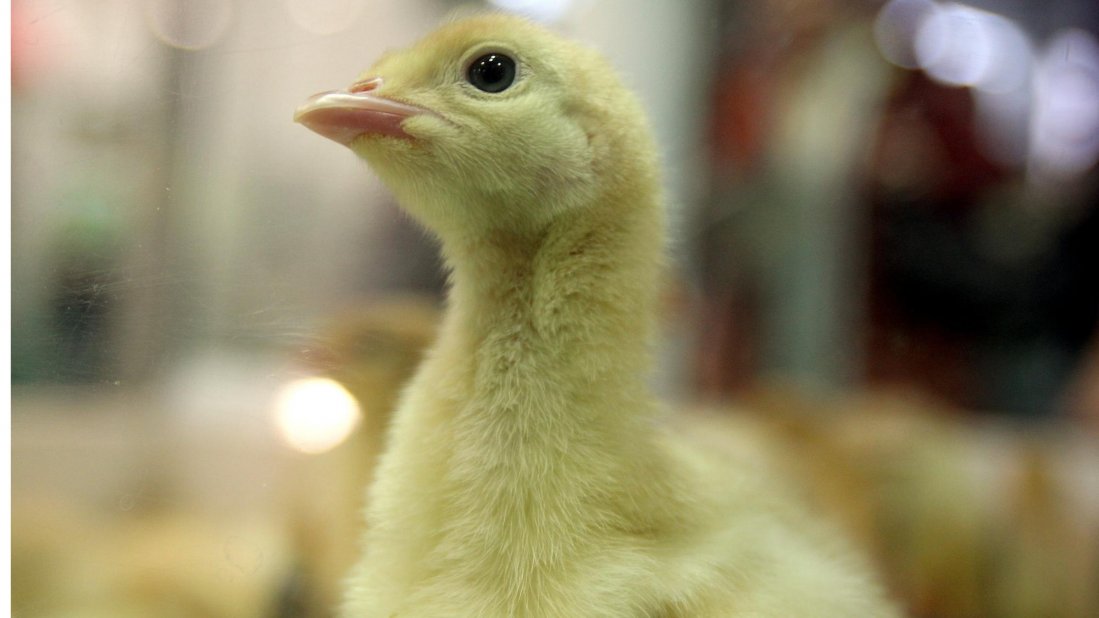
The killing of 20,000 chicks at Brussels Airport causes trouble in Belgium. Several politicians responded on Tuesday outraged that the animals intended for Africa were gassed at the weekend because of a transport problem. The Flemish Greens deputy Bart Caron spoke of an incident as in “Absurdistan”.


The chicks were supposed to be flown to Kinshasa in the Congo. But the departure failed twice for technical reasons, as the news agency Belga reported. Accordingly, the transport container was on the asphalt in the burning sun all weekend. The exporter did not want to take back the container according to media reports. To stop the suffering of the animals, they should finally be gassed on Sunday evening. The airport fire brigade refused and therefore their colleagues from neighboring Zaventem were called and took action.

The action triggered outrage in Belgium. “In any case, the responsible exporter must be held accountable, maybe even the airport itself,” said the “Green” Caron. His non-party colleague Hermes Sanctorum said: “It has come to the point that the most animal-friendly solution to transports is killing.” There is probably no difference between simple Amazon packages and animals. The deputy Jelle Engelbosch of the Flemish nationalist N-VA, however, spoke of a “necessary, urgent decision”. (AP)

My Comment:  When PETA compared the lives of animals in farms with the Holocaust several years ago, “sensitive” citizens were schocked!!
This mass murder of 20,000 creatures in Brussels, or more precisely their gassing according to the well-known fascist methods of the Nazis, confirms that animals today are still the victims of a daily holocaust that will never end.

Because, as Isaak Bashevic Singer says: “when it comes to animals, everyone becomes a Nazi.
For the animals every day is Treblinka” . Or Brussels.

My regards to all

Venus

https://deutsch.rt.com/newsticker/69569-20000-kuken-am-brusseler-flughafen-vergast/