Posted on September 6, 2020 by Serbian Animals Voice (SAV)
An action by the radical environmental movement Extinction Rebellion (XR) causes trouble in Great Britain. Now the government wants to take action against the group.
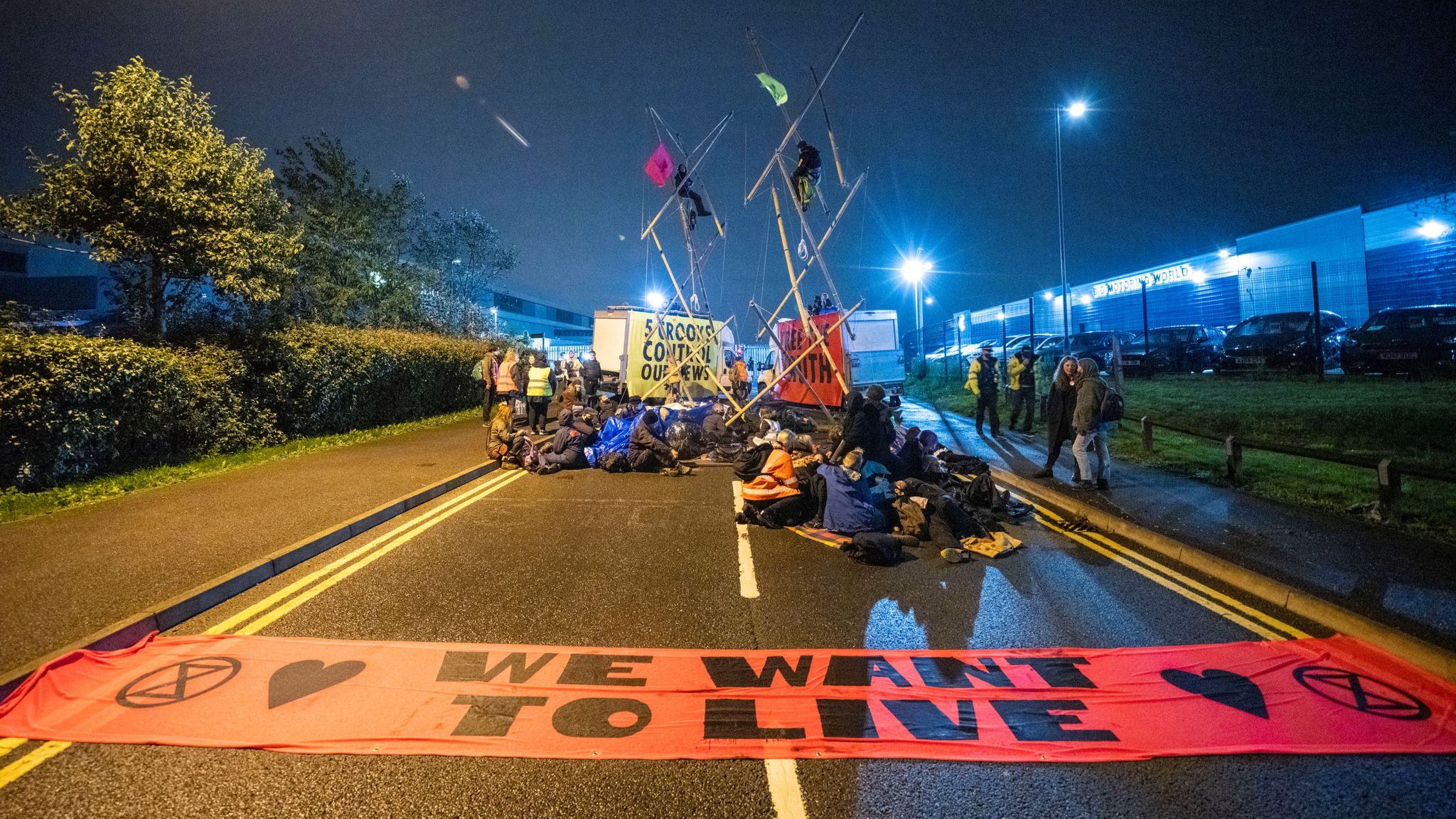
Activists ( more than 100 XR demonstrators) blocked two printing plants belonging to the Rupert Murdoch group (“The Sun”, “The Times”) on Saturday, which is why many British people did not get a daily newspaper.
“It is totally unacceptable to restrict public access to news in this way,”Johnson tweeted on Saturday.
The newspaper “The Telegraph”, which was itself affected by the blockade, now reports, citing government circles, that one of the considerations is to classify Extinction Rebellion as a criminal organization(!!)
Prime Minister Boris Johnson and Home Secretary Priti Patel have asked their officials to take a “fresh look” at how this group should be classified by law.
Responding to criticism from Ms. Patel that their actions were an “attack on our free press” (!!!), XR said: “Our free press, society, and democracy is under attack – from a failing government that lies to us consistently, is becoming increasingly authoritarian, and is leading us towards four degrees of warming.”
Extinction Rebellion activist Gully Bujak, 27, said: “You cannot have a functioning democracy with a mainstream media that is ruled by a small, unrepresentative sect of society, who are in bed with politicians and the fossil fuel industry.
“The climate emergency is an existential threat to humanity. Instead of publishing this on the front page every day as it deserves, much of our media ignores the issue and some actively sow seeds of climate denial.
“They thrive off of polarization and division. They sow hatred in order to distract us, actively profiting from this division.
“To these papers, we say this: you will not come between us anymore. For a night we’re going to filter out the lies and take the power back. For a night we’re going to show the world that you are vulnerable, just like us.”
The demonstrations prevented the distribution of millions of papers. Pic: XR
Statement from the organization XR UK about its action
5 Billionaires control over 70% of the British Media. Last night Extinction Rebellion groups blockaded the printing presses of The Sun, The Times, The Sun on Sunday, The Sunday Times, The Telegraph, The Sunday Telegraph, as well as The Daily Mail, Mail on Sunday, and The London Evening Standard.
These people and their corporations have purposefully failed to accurately report on the climate & ecological emergency. Their consistent manipulatIon of the truth to suit their own personal and political agendas must be stopped.
We’re not moving forward at the speed we need to turn the climate and ecological emergency around. We’re trapped somewhere between acceptance and the reality of just how bad the situation is.
The right-wing media is a barrier to the truth, failing to reflect the scale and urgency of the crisis and hold governments to account. Coverage in many of the newspapers printed here is polluting national debate on climate change, immigration policy, the rights and treatment of minority groups, and on dozens of other issues.
They distract us with hate to maintain their own power and wealth, profiting from our division. We can’t move forward until this barrier falls.
The truth is being held hostage and so are we. We need to Free the Truth.
On my part … bravo #Extinction Rebellion! excellent work!
And Prime Minister Boris Johnson, actually a faithful copy of Trump, must release Julian Assange if he wants to prove to us that he is a supporter of the free press.
Because Assange, as a fair journalist, did nothing else than bring the truth to light.
Posted on September 6, 2020 by Serbian Animals Voice (SAV)
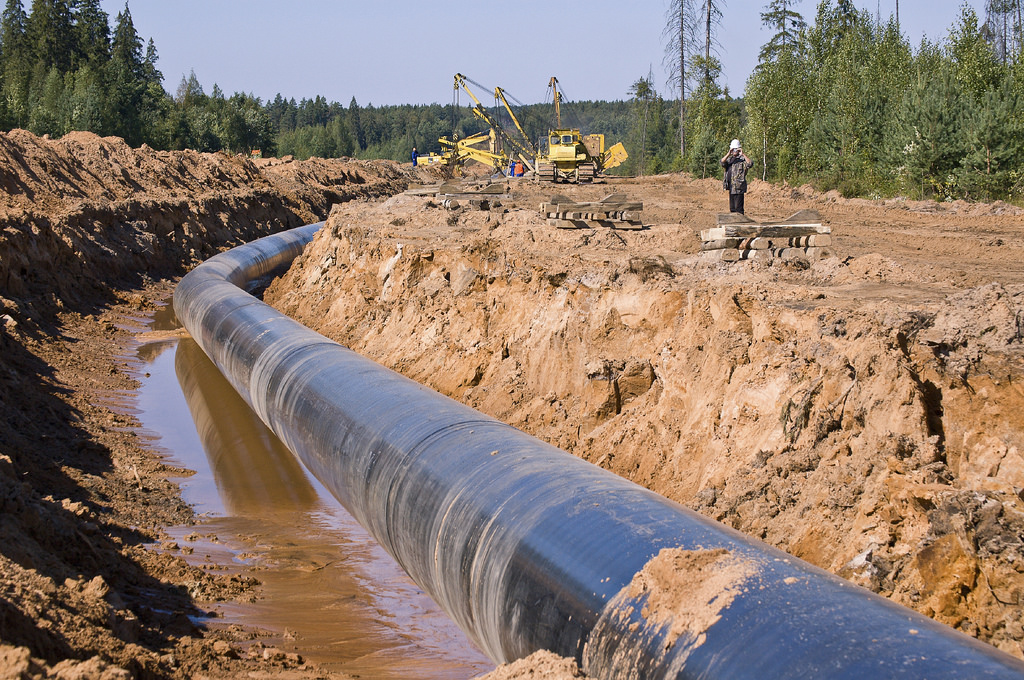
Despite the global plunge in oil prices, a major pipeline that would carry oil 900 miles across East Africa is moving ahead. International experts warn that the $20 billion projects will displace thousands of small farmers and put key wildlife habitat and coastal waters at risk.
Imagine a tropical version of the Alaskan oil pipeline. Only longer.
And passing through critical elephant, lion, and chimpanzee habitats and 12 forest reserves, skirting Africa’s largest lake, and crossing more than 200 rivers and thousands of farms before reaching the Indian Ocean — where its version of the Exxon Valdez disaster would pour crude oil into some of Africa’s most biodiverse mangroves and coral reefs.
Such a project is ready for construction, to bring to the world oil from new oil fields in the heart of Africa.
It is the East African Crude Oil Pipeline.
The middle of a global pandemic, during which oil demand is in freefall and prices at rock bottom, might seem an odd moment to boost the world’s oil production.
But the petrochemicals industry is always looking for new reserves to replace those being exhausted.
And two oil fields discovered on the shores of Lake Albert, which straddles the border between Uganda and the Democratic Republic of the Congo, are currently among the biggest and cheapest new reserves available.
They contain an estimated 6 billion barrels, roughly half the size of Alaska’s Prudhoe Bay field.
Construction work has begun at the Kingfisher and Tilenga oil fields, where the China National Offshore Oil Corporation and French giant Total intend to sink 500 wells.
They have already spent an estimated $4 billion on infrastructure and made enemies among local communities by grabbing land and providing paltry compensation.
WWF Uganda, in a 2017 report, warned that the pipeline “is likely to lead to significant disturbance, fragmentation and increased poaching within important biodiversity and natural habitats” populated by elephants, lions, and chimpanzees that are on the international Red List of threatened species.
It “has a greater environmental and social risk” than other pipelines planned in the region, said Paolo Tibaldeschi of WWF Norway, and author of the 2017 report.
It is “longer, and crosses a hilly and seismic region near Lake Victoria, and several biodiversity habitats down to the coast,” he noted.
Friends of the Earth France,along with Survie and four Ugandan partners,have spent months investigating the situation on the ground, seeking to shed light on the violations committed by this criminal, multinational corporation. The evidence is piling up against Total. Under the new French law on the corporate duty of vigilance, Friends of the Earth France and Survie are taking Total to court, and they need our support.
And I mean…An environmental crime!!
France has a shameful colonial past when it comes to Africa, one that President Emmanuel Macron described as a ‘crime against humanity’.
And yet here we are in 2020 with a French oil firm desperately pushing through a major fossil fuel project so it can profit even more from the climate suffering of Africans.
Ultimately if the world breaches the 1.5°C goal, it will not be Africa’s fault.
Africa makes up 17% of the world’s population and has generated only 4% of global emissions.
The fault will lie with the criminal politicians and companies of the global North.
Instead of helping Africa develop along clean energy pathways, they are greedily shackling the continent to a dirty fossil fuel future with dire climate consequences for us all.
Posted on September 5, 2020 by Serbian Animals Voice (SAV)
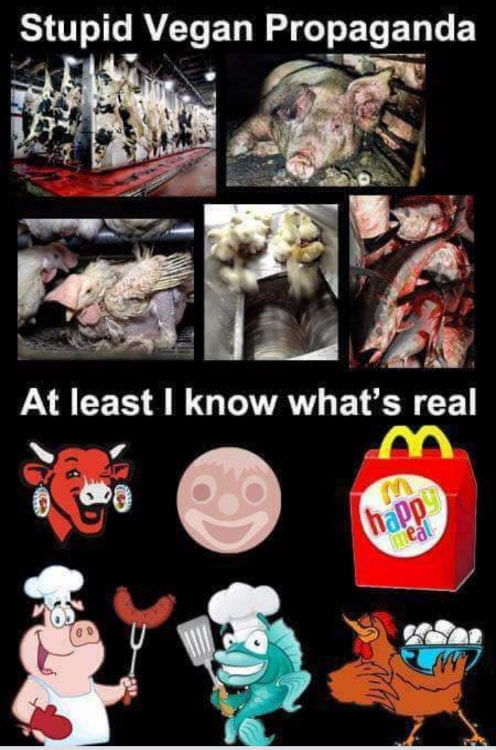
…then people will end up believing them
Propaganda for meat consumption must be made popular
It is successful when it has reached the lowest level of intelligence for which is actually planned for
Posted on September 5, 2020 by Serbian Animals Voice (SAV)
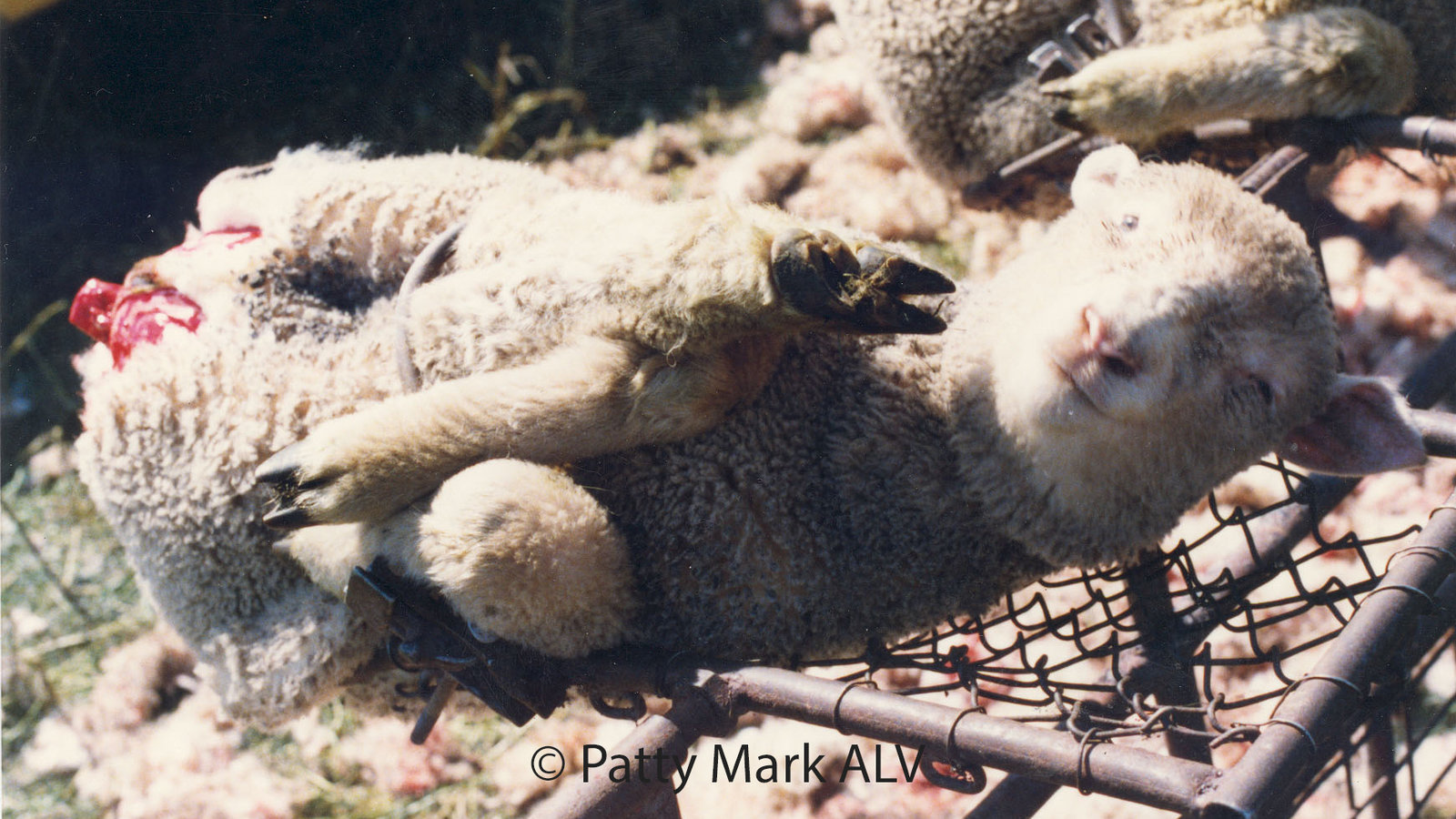
This is the story of a chic, fluffy wool sweater. It belonged to a lamb. And this little lamb had a butt.
They once lived in Australia, which is where 90% of the fine wool used in the clothing industry worldwide comes from.
But the fluffy lambs have natural enemies. Flies that lay their eggs in the many folds of skin around the lamb’s butts. Parasites.
Mulesing / ˈmjuːlziŋ / is the method that wool producers want to prevent this fly infestation.
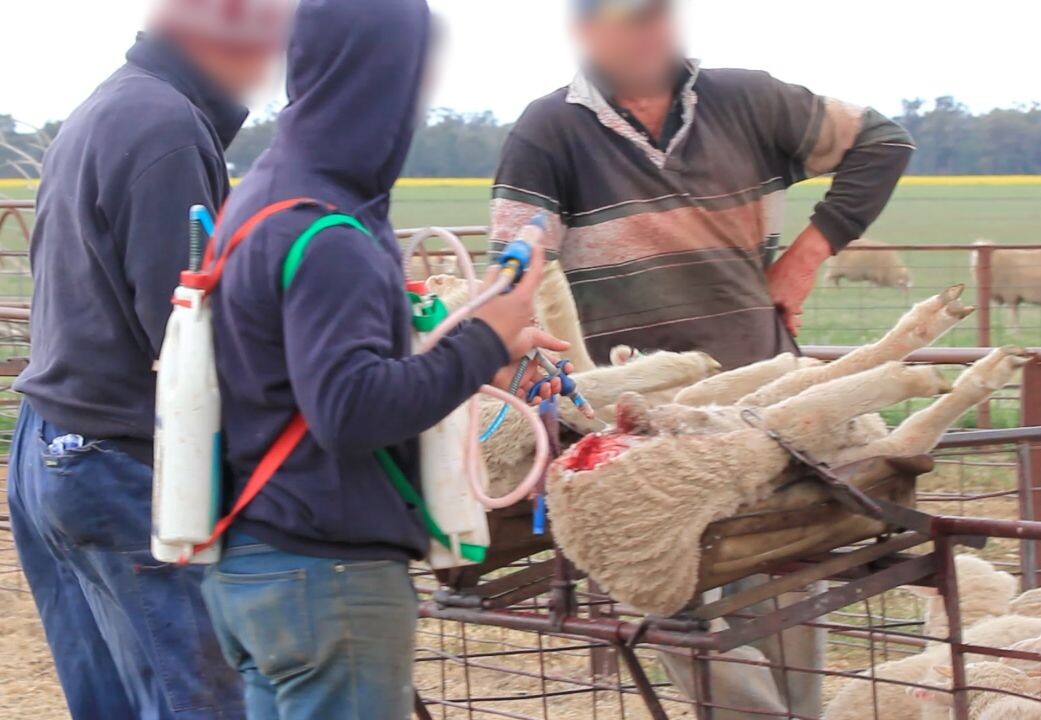
Australia | 2017 | Sheep and lambs on a farm with mulesing practice. Mulesing is the removal of strips of wool-bearing skin from around the breech (buttocks) of a sheep to prevent flystrike (myiasis). Here: mulesing practice.
They strap on the little lamb, who is a few weeks old, and cut off the skin around his but. This is done with scissors and usually without anesthesia.
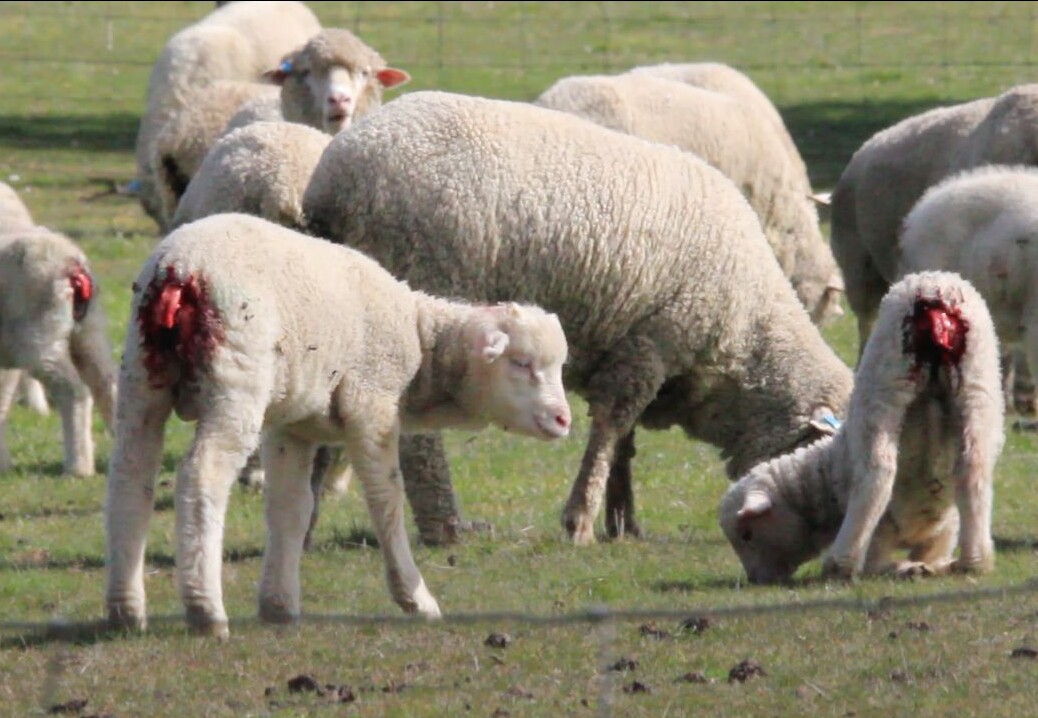
Australia | 2017 | Here: Mulesed lambs next to their mother sheep
The lamb suffers for our clothing. The wool sweater was once part of a living being with emotions, fear, and pain.
But there is a solution: sheep that are naturally less prone to fly attacks.
Switching to these sheep is an expense for wool producers, but it is feasible.
With your signature, call on clothing brands to work with the wool industry to end the cruel practice of mulesing. Together we can rethink the industry and save countless sheep from the pain.
And I mean…New Zealand introduced a ban on mulesing on October 1, 2018.
In Australia, there is only a voluntary ban in which each sheep farmer can decide for himself whether his sheep are mulched or not.
Many large fashion chains, including H&M,Hugo Boss, and Adidas, distance themselves from “mulesing wool”.
However, I wonder how these many and large chains can control this.
Australia is the world’s largest wool exporter, so it cannot be guaranteed whether wool that comes from this country is really mulesing-free or not.
This animal suffering can be ended for good by not buying wool.
Materials such as organic cotton, modal, hemp, or polyester fleece also keep us warm and are also a great alternative for knitting enthusiasts.
Posted on September 4, 2020 by Serbian Animals Voice (SAV)
The hunt for dolphins and other small whale species begins again off Japan’s coasts. In the run-up to the drive hunt, which lasts from September to March, measures were taken against possible protests in the whaling town of Taiji, where most of the dolphins are caught.
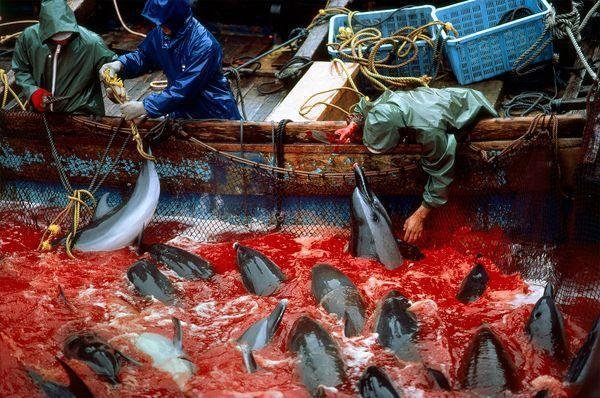
The animals are cornered by several fishing boats in driven hunts. The fishermen hit metal pipes that protrude into the water to frighten the dolphins. The dolphins try to escape this noise and flee to nearby bays.
There they are encircled – and their traders can choose the most beautiful and strongest animals for dolphin shows.
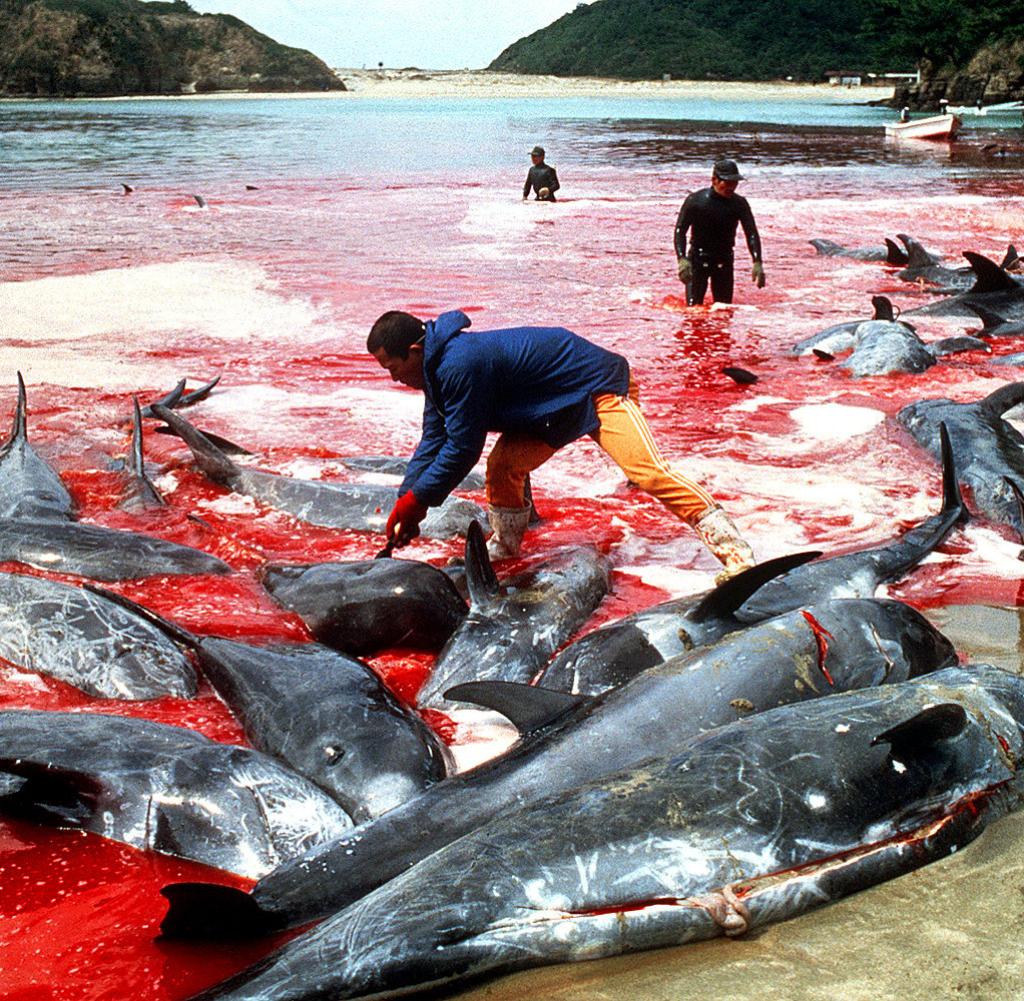
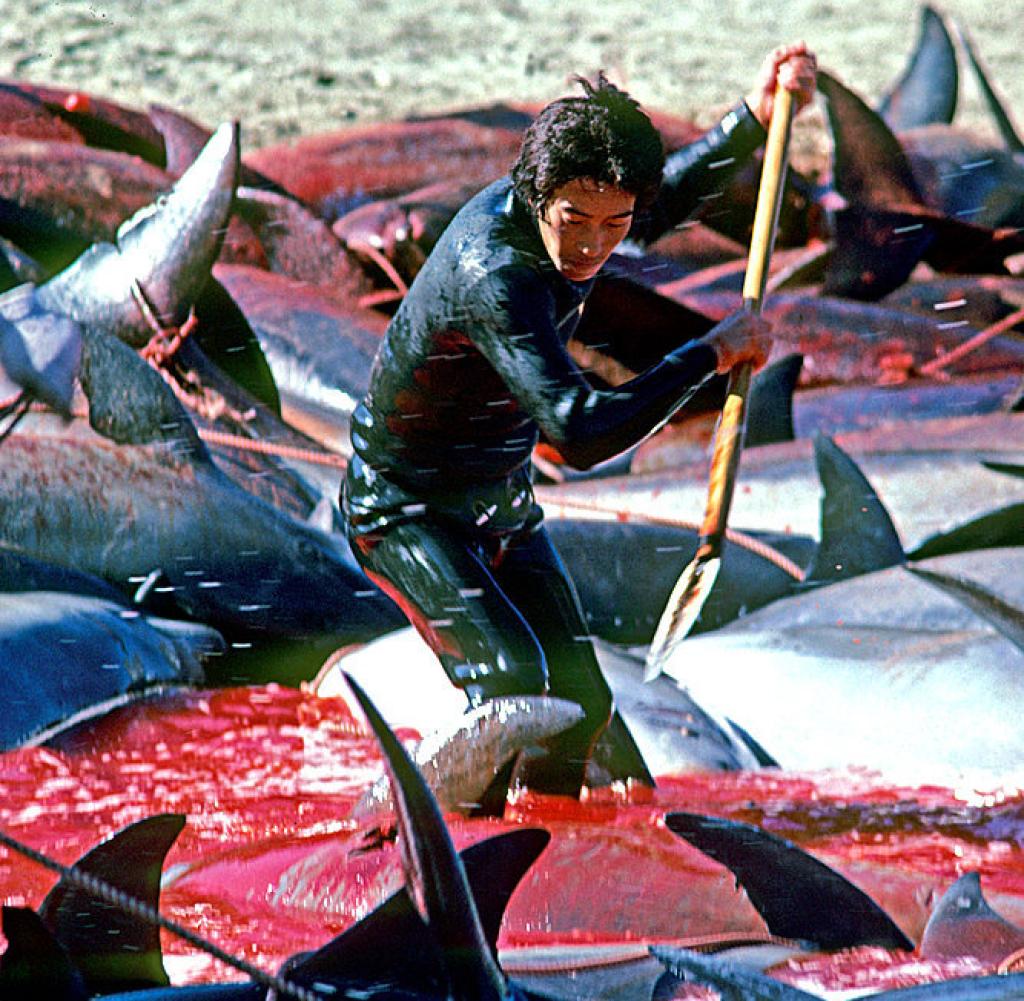
Dolphins that are not selected for the dolphinariums are easy prey for fishermen. They are brutally slaughtered with harpoons, spears, or knives.
A live dolphin is worth up to $ 150,000, one dead 600 dollars.
According to local media, emergency services trained to intercept small boats. Drones were also banned in this year. The police set up a temporary guard for the duration of the hunt.
In the picturesque lagoon near the small whaling town of Taiji around 700 kilometers south of Tokyo, animal trainers sort out the most beautiful specimens on behalf of dolphinariums at home and abroad.
Animal rights activists call prices of up to $ 150,000 each. Then a brutal slaughter begins.
Fishermen drag the wildly wriggling animals, which were not sorted out for sale, in three or four groups, hanging on the side of motorboats, into a neighboring lagoon – while doing turning maneuvers they drive over the captured dolphins.
Others are slaughtered with spears, hooks, and knives in the bay, which is closed to the public.
These gruesome scenes repeat themselves year after year between September and March.
“This is exactly why you have to be on-site with a small team around the clock for the entire six months of the dolphin hunting season. The level of extreme cruelty literally cries out to be made public.
This must by no means be hidden from the public, especially not from Japanese consumers”, says the founder and director of the Dolphin Project, Ric O’Barry.
And I mean … The hunt for whales and dolphins does not play a role in feeding the Japanese population, is condemned worldwide, and is certainly not economical.
Why is Japan still doing this? The Japanese government’s answer is that whaling is an ancient part of Japanese culture, that fishermen have been catching whales for centuries, and that Japan will never allow foreigners to tell its people what they can and cannot eat – and so Japan continues to slaughter Whales and dolphins.
If the government of Japan recognizes some insane dolphin butchers as the cultural bearers of the country, then one wonders who is running the country.
If you can be enthusiastic and enjoy how innocent and utterly defenseless animals suffer and are tortured to death in such a way, you are no more than a wretched monster and have in no way earned anything like your own human rights.
Let alone the right to call such a massacre” culture”!!
If we consider that radioactive water and toxic waste from Fukushima are dumped in the ocean, then Japan should rather try to get the disaster of Fukushima under control and not give lectures on culture.
Maybe the Japanese fishermen can deal with Facebook and other social media despite their mental limitations, then they will see what a little bunch they are still and how one thinks about their so-called culture in the world.
Posted on September 4, 2020 by Serbian Animals Voice (SAV)
(from the diary of the animal sanctuary “Butenland”, Germany)
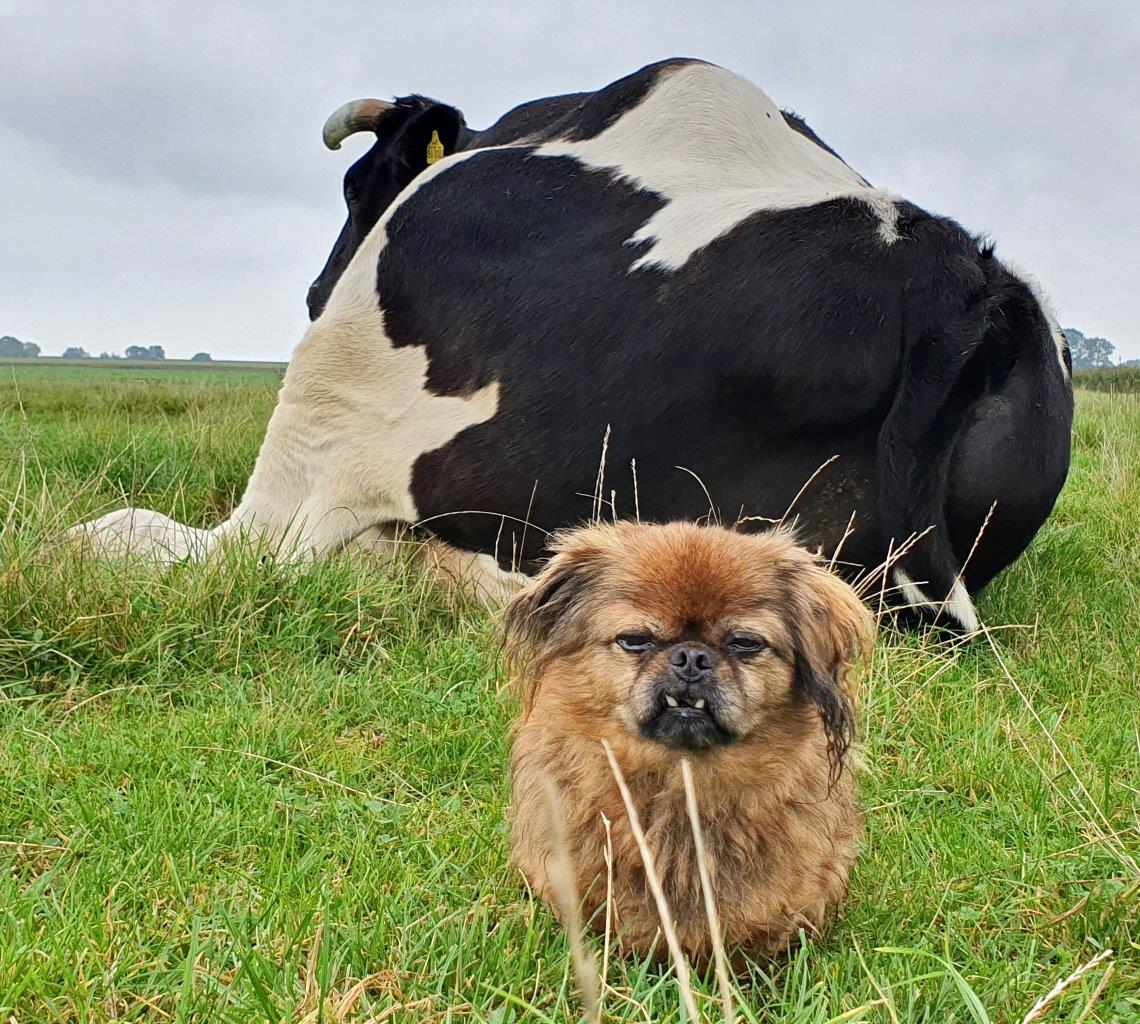
Today, Martin, a heavyweight Butenlander, celebrates his 15th birthday, who only knows the suffering of the other members of the herd from their stories. Just like Mattis, this ox was born right here on the farm after a bull from the neighborhood managed to get past our fences and had a short rendezvous with Martina.
A good 9 months after this intense flirtation Martin saw the light of day.
The only problem he had to live through since then is his rather resolute mum.
For 18-year-old Martina is by no means a mother hen like Dina, Jette, or Tilda, but has instead fully embraced the concept of independence and accordingly pressed the stable keys into Martin’s claw after only 12 months of parenthood.
After that, the two of them did have contact from time to time, but our softie could only dream of mother’s milk and the encounters with his mum were limited, if at all, for a short morning greetings.
But this did not harm Martin, he still grew up to an impressive 1,200-kilo ox, which has the most individual horns on all of Butenland.
Of course, we check them regularly to make sure they don’t press on his forehead. However, a newspaper can still fit through the gap to his head at any time and, purely in terms of the course of growth, this will most likely not change.
Julchen was invited to the birthday party and of course the professional party-crasher team Anna and Fine also paid their respects.
At the end of the party, even Mama Martina came over to eat leftovers.
No wonder that the party was a real blast and the birthday child had a lot of fun.
And I mean…“A different coexistence of humans and animals is possible. This is shown by this sensitive film” is on the cover sheet of the video.
Yes! we agree! There is nothing better than that we can experience the animals in freedom, happiness, and peace.
Some sanctuaries made it their life’s mission and one of them is Hof Butenland, one of the best in Germany.
There is also a movie about this “cow paradise”.
The movie “Butenland” shows how old and sick animals can live in peace on the farm of the same name until they die.
You can see some excerpts here.


 The demonstrations prevented the distribution of millions of papers. Pic: XR





 Serbian Animals Voice (SAV)